
American Lung Association Reports 2025 "State Of The Air" Findings

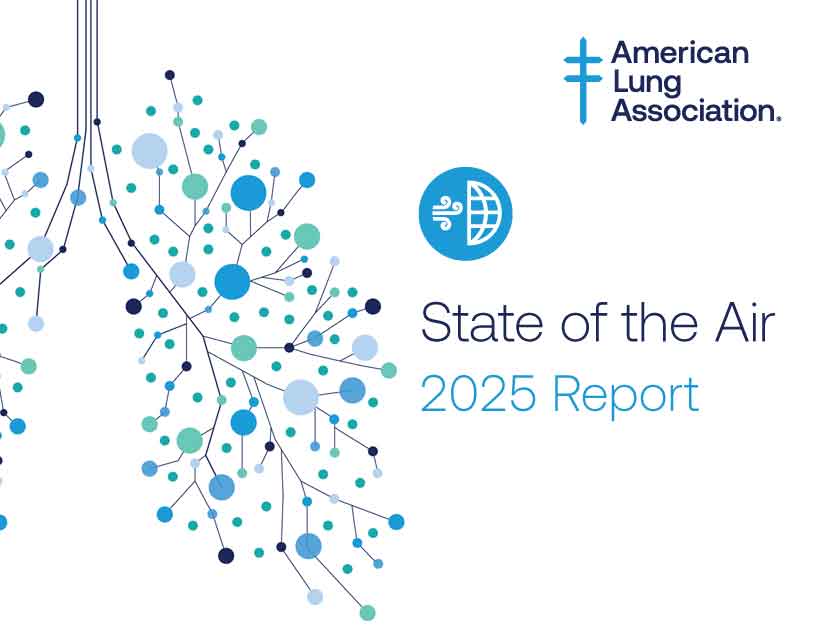
Each year since 2000 the American Lung Association (ALA) has published their “State of the Air” report. Recently the ALA released the 2025 edition filled with information about air quality across the United States. Here’s an overview of what they found.

Air Pollution Is Still A Growing Problem

Despite efforts to curb air pollution sources, environmental circumstances have made air pollution levels worse. Incidents such as wildfires have been made worse due to extreme heat and drought conditions. All of these combined to make particle pollution and ozone levels a problem for larger areas of the United States. Per the ALA unhealthy levels of ozone and particle pollution now affect almost half of the entire United States population (156.1 million people).


Particle Pollution Is Still A Problem

The report looks at both short and long term particle pollution levels. Short term particle pollution spikes have been mostly tied to wildfire activity across the country. Due to the nature of wildfire smoke to drift across far distances, more people are being exposed to smoke particles than in previous years. 2024 saw the most ever recorded number of particle pollution days in the “very unhealthy” range. 


In regard to year-round particle pollution levels the ALA reports that over 85 million people live in areas with high particle pollution levels. This is actually an improvement over last year’s report which found 90.7 million people were affected. Unsurprisingly the ALA found that particle pollution sources such as highway traffic, burning fossil fuels, oil/gas drilling, and heavy industry were the biggest causes of air pollution.


Ozone Pollution Is On The Rise Again

After years of declining levels, unfortunately ozone pollution is on the rise again. The ALA estimates that nearly 125 million people live in areas with unhealthy levels of ozone. Some areas saw large swings in ozone levels to the detriment of health conditions. Wildfires were a large part of the reasons behind these rising ozone levels. High temperatures combined with wildfire generated pollutants to create the perfect ozone forming conditions.


What Can We Do?

So how can we stop air pollution? The ALA stresses protecting the U.S. Environmental Protection Agency (EPA) as a major tool in the fight against air pollution. It is through the EPA that the ALA is able to access air pollution monitoring data that keeps the public informed. Recent staffing cuts at the EPA jeopardize the collection of this data. The EPA is also part of preventing pollution at the source through planning, inspections and regulatory guidelines. 
Explore the Breathe Easy Blog

View all

Hurricane Season Starts Outside. The Air Prep Starts at Home.

Hurricane Season Starts Outside. The Air Prep Starts at Home.

Hurricane prep usually starts with the obvious: batteries, bottled water, flashlights, medications, and a plan for where to go if conditions turn dangerous. But hurricane season home preparation should also include the air inside your home.

I've lived in Florida my whole life, so hurricane prep feels almost like a seasonal ritual. Still, indoor air can be easy to overlook when there are shutters to hang and supplies to track down.

Read more

Clean Air Self-Care: Small Ways to Breathe and Feel Better at Home

Clean Air Self-Care: Small Ways to Breathe and Feel Better at Home

As I live and breathe, National Wellness Month is finally here! And what better time to talk about personal wellness tips and tricks than this? Self-care can take many forms. For some, it's a better bedtime routine. Morning people might tell you it's a few quiet minutes before the day begins.

Read more

Outside In: How Your Yard Affects Your Indoor Air Quality

Outside In: How Your Yard Affects Your Indoor Air Quality

Counterintuitively, a big part of maintaining good indoor air quality (IAQ) is being more mindful of the air outside your home. That's because half of what's in the air outside can make its way inside [1][1].

From pollen and mold spores to pesticides and other lawn treatments, lots of different outdoor contaminants find their way into the air you breathe when you're chilling on the couch, eating lunch at the kitchen table, or even tucked under the covers in bed. 

Read more

The Skin-Deep Side of Summer IAQ

The Skin-Deep Side of Summer IAQ

As a lifelong resident of the Sunshine State, I consider myself an authority on all things sunny. So, I speak from experience when I say: Summer has a way of making skincare routines and hair maintenance schedules feel like full-time jobs. 

Read more

Summer Staples That Threaten Clean Indoor Air

Summer Staples That Threaten Clean Indoor Air

Summer is all about getting outside and having fun, but for many families, it also means a rush of indoor air pollutants that go largely unnoticed.

From sunscreen sprays to insect repellents to beachy scented candles, the products we use to help us enjoy summer can measurably degrade our indoor air quality (IAQ). Volatile organic compounds (VOCs) from these everyday items can accumulate to concentrations much higher indoors than outdoors, triggering everything from mild irritation to more serious long-term health consequences [1][1]

Read more

The Smoky Side of Summer

The Smoky Side of Summer

Grills firing up. Fireworks cracking overhead. Citronella candles glowing on the patio. Personally, I'm excited for the festivities. But some of summer's most familiar moments come with a little smoke.

We usually think of these as outdoor activities, which makes them feel separate from the air inside our homes. But your indoor air doesn't exist in a hermetically-sealed bubble. Smoke can drift through open doors, screened porches, cracked windows, attached garages, and nearby air intakes. And once those tiny particles make their way inside, they can linger longer than the fun.

Read more

Breathing Activities to Help Kids Keep Their Cool

Breathing Activities to Help Kids Keep Their Cool

Big emotions are a regular part of childhood, but kids don't always know how to manage them without support. One of the simplest and most effective emotional regulation tools they can learn also happens to be completely free: mindful breathing. For kids and adults, deep breathing helps calm the body's stress response, making it easier to control emotions, refocus, and navigate challenging situations. 

Read more

Shedding Light on Pet Allergens: How Pets Affect Indoor Air Quality

Shedding Light on Pet Allergens: How Pets Affect Indoor Air Quality

We love our pets. We love their little routines, their tiny dramatic sighs, their oddly specific favorite spots around the house. What we don't love quite as much? We love our pets. We love their little routines, their tiny dramatic sighs, their oddly specific favorite spots around the house. What we don't love quite as much? The fur tumbleweeds, the mystery smells, and the microscopic particles they leave behind.

Read more

Summer Air Myths

Summer Air Myths

Summer is often portrayed as the season of fresh air, when you're supposed to get out of the house and enjoy the great outdoors, or at least crack open a window or two. But well-meaning advice about "getting fresh air" isn't always supported by science. This article debunks five common myths about summer air quality, so you can make more informed decisions about your home environment. 

Read more