

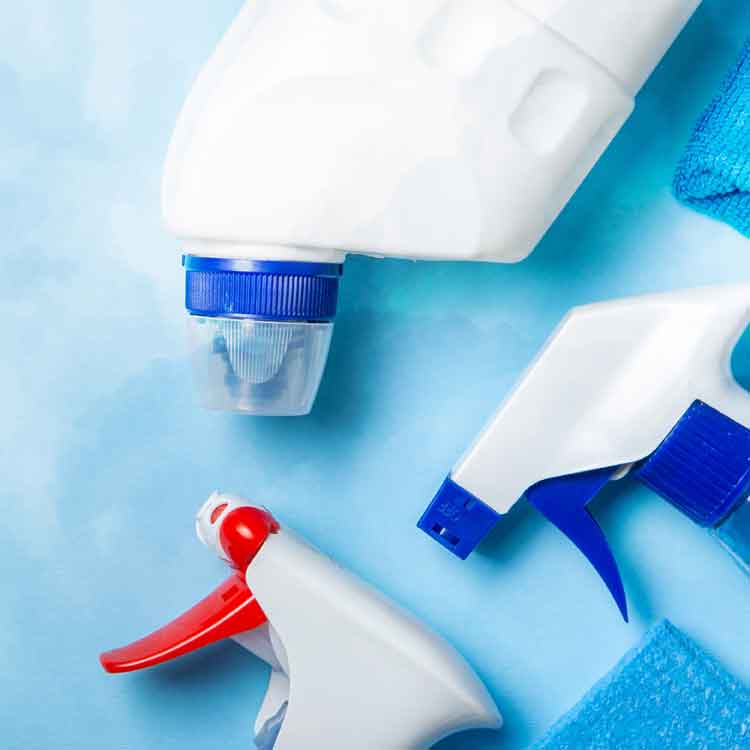
Things you use every day around the house tend to go unnoticed over time. They just blend into the background of everyday life. But have you ever actually taken the time to read the labels on the products you buy and use? Do you know what kinds of chemicals are released into the air when you use them? You don't have to be a home chemist to have potentially dangerous chemicals in the air around you. Let's take a look at four of the more common household chemicals and the dangers they may cause when they hit the air.
1. Ammonia
What is it? Ammonia is a colorless gas made up of nitrogen and hydrogen. It is usually dissolved in another liquid.
Commonly found in: glass cleaner, oven cleaner, multipurpose cleaner, toilet cleaner, floor cleaner, carpet cleaner, drain cleaner, disinfectant spray
How is it dangerous? Ammonia is in a lot of liquid cleaning products that are applied by spray. Ammonia in the air can irritate the eyes, nose, throat and lungs. Coughing, wheezing, and even burning sensations in those areas can also occur. Care must be taken when working with products containing ammonia, as it can react with other chemicals to form dangerous compounds. For example, ammonia reacts with bleach to form toxic chloramine gas.
2. Formaldehyde
What is it? Formaldehyde is a colorless gas organic compound with a strong smell made up of carbon, hydrogen and oxygen.
Commonly found in: carpet, insulation, glue, particleboard, plywood, medium density fiberboard, nail polish, wallpaper, paint
How is it dangerous? Formaldehyde is a known carcinogen and one of the most common indoor air pollutants. Products made with formaldehyde release it into the air over time. It can cause eye irritation, difficulty breathing (including triggering asthma attacks), headaches, or even a burning sensation in the throat. New building (or new renovations) construction materials can give off formaldehyde fumes for up to two years. The EPA has set standards for allowable formaldehyde emissions from products, but high levels of exposure have been linked to some cancers.
3. Chlorine
What is it? Chlorine is a greenish-yellow gas with a strong smell that reacts easily with other elements.
Commonly found in: bleach, disinfectants, pool chemicals, toilet cleaner, mold/mildew remover, some laundry/dishwasher detergents
How is it dangerous? Chlorine is a very toxic element. It causes irritation and a burning sensation to the nose, throat and lungs. Coughing, wheezing and shortness of breath are potential results from chlorine gas exposure.
4. Toluene
What is it? Toluene is a colorless liquid that does not dissolve in water.
Commonly found in: nail polish, paint, paint thinner, gasoline, glue, wood polish, stain remover, degreaser, cigarette smoke
How is it dangerous? Toluene in the air can irritate the eyes, nose, throat and lungs. Low-level exposure can make a person feel tired, weak, nauseous and forgetful, while also affecting vision and hearing.
All of these chemicals are dangerous in one way or another. This is especially true for those with compromised health, seniors and children. Anything that affects the body's ability to breathe should be a concern.









Get Ready For The 2026 Cold And Flu Season
Why Your HVAC Filter Isn’t An Air Purifier