

Summary
HEPA filters and activated carbon filters serve two very different purposes in air purification, one targets particles, the other targets gases and odors. This article breaks down how each type works, why their lifespans vary based on what’s in your air, and how understanding those differences helps you match the right filter to your indoor air concerns.
In This Article
If you've ever compared air purifiers, you've probably run into the same question as a million other concerned shoppers: HEPA vs activated carbon (or both). Are they interchangeable? Do they last the same amount of time? And how long do carbon filters last compared to HEPA filters?
We make it a point to answer common questions like these to make your air purification journey that much easier. But sometimes—like now—there aren't right or wrong answers, just ones that need some explaining.
In short: These filters have completely different jobs. Understanding those jobs makes it much easier to know what kind of filter you need, and how long it may reasonably last in your home.
Let's break it down and filter through some serious air knowledge.
HEPA vs Activated Carbon: Different Problems, Different Solutions
This is a classic apples-to-oranges situation. HEPA filters and activated carbon filters are both filters, just like apples and oranges are both fruit. But they're designed to target different categories of pollutants.
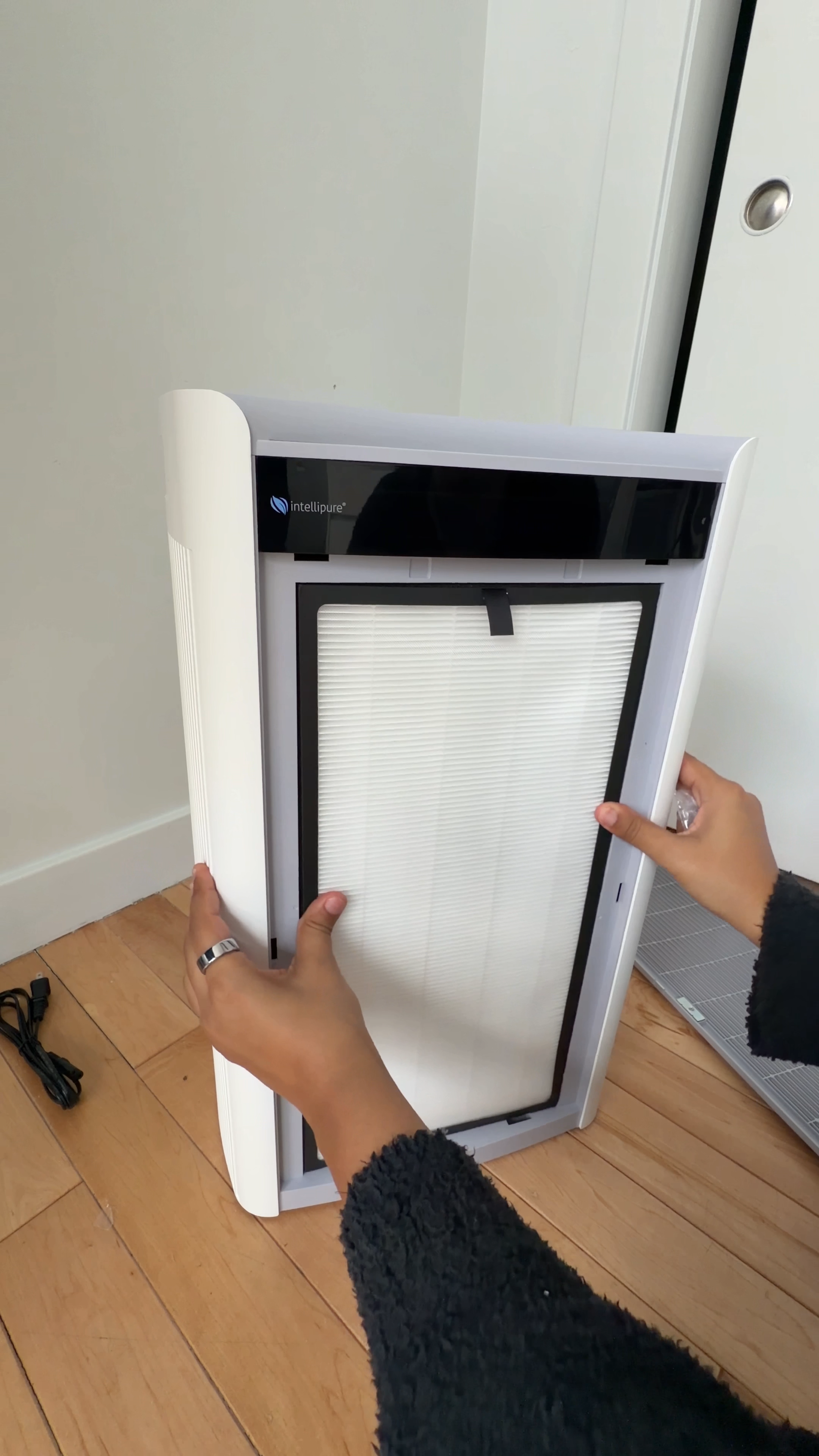
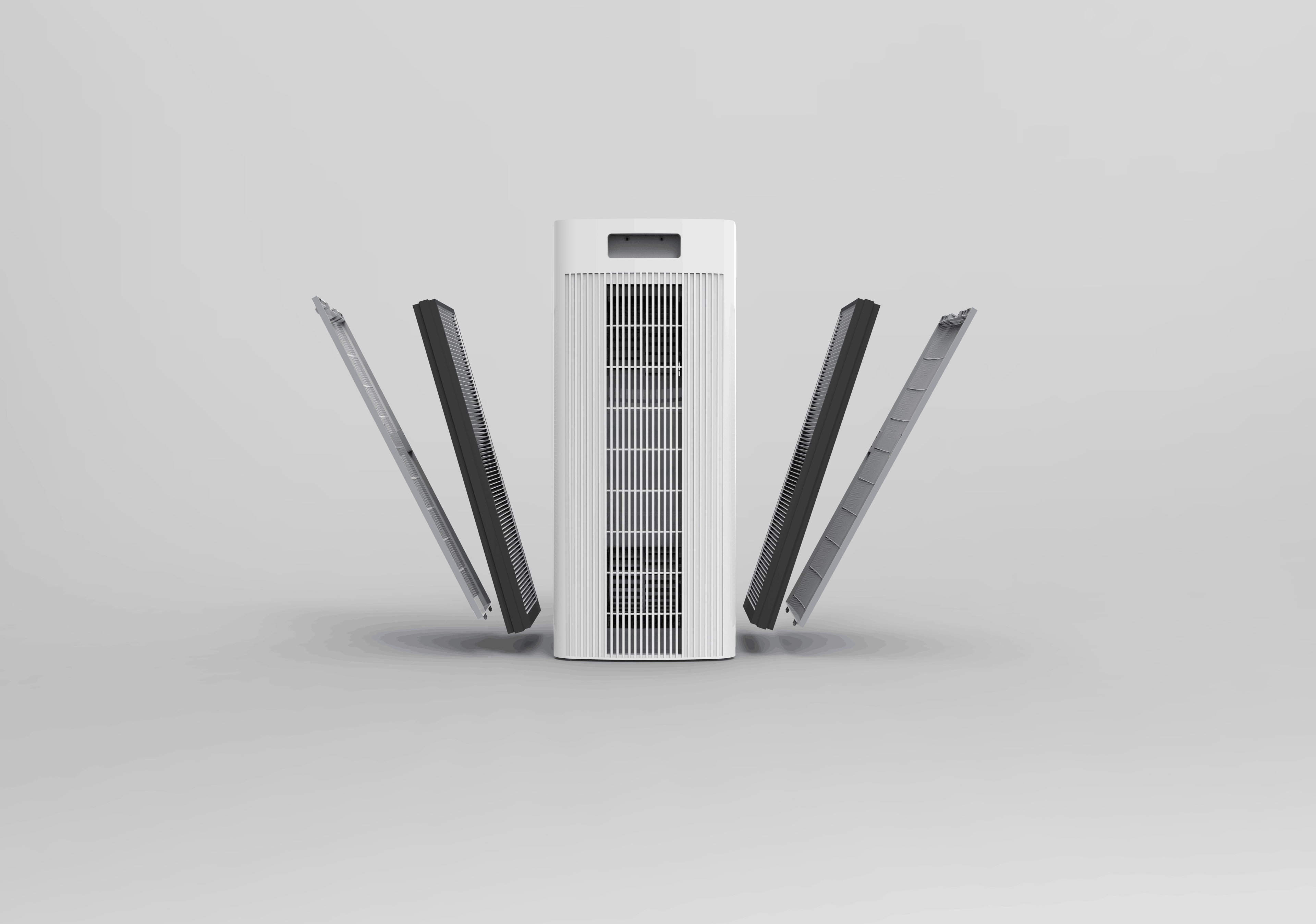
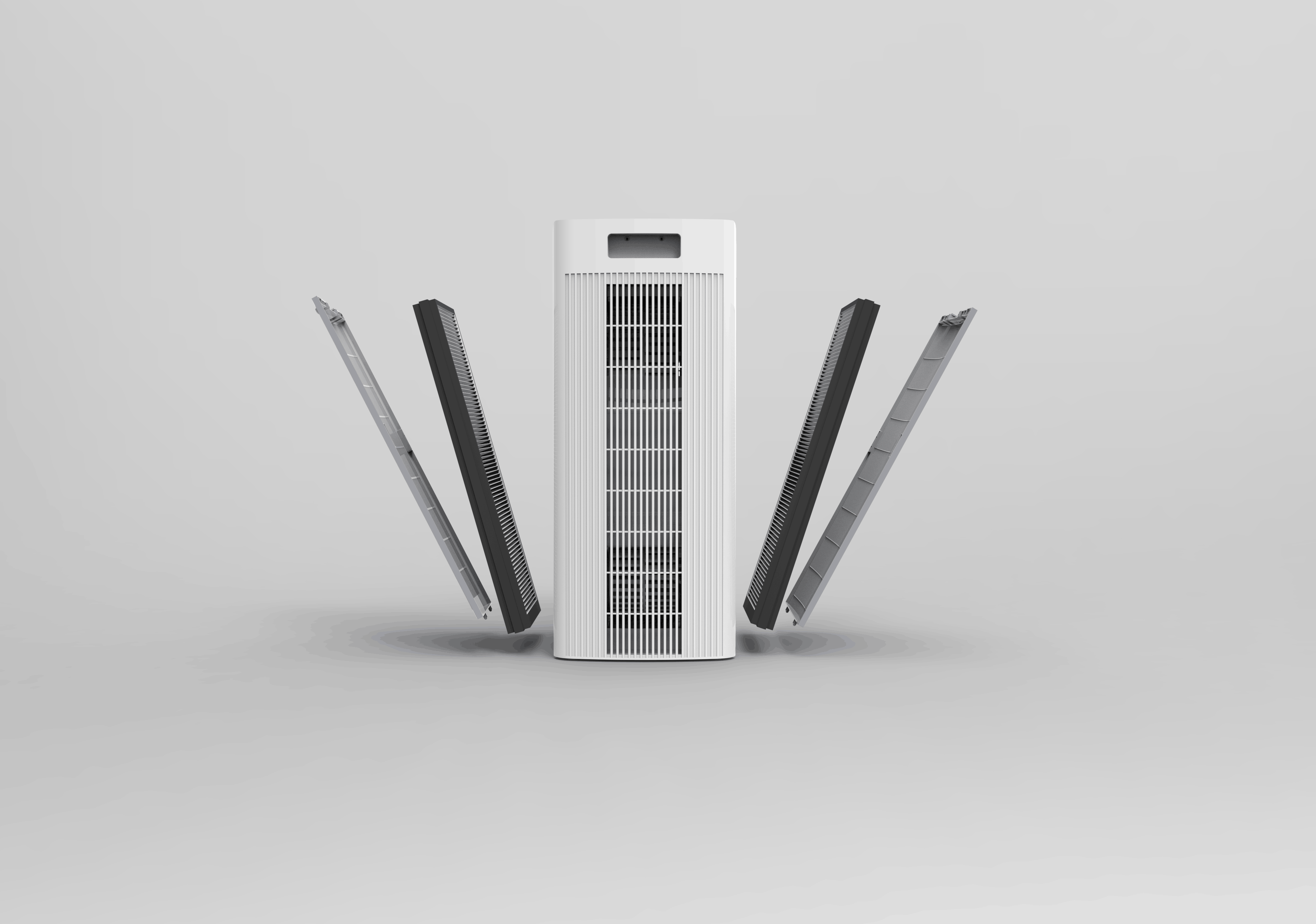
HEPA filters are built to capture airborne particles. To be more specific: HEPA filtration is effective for removing particles such as dust, pollen, pet dander, mold spores, and smoke particles from the air [1]. You probably know them as "those things always mucking up my sinuses."
What HEPA filters do not remove are gases and odors. Not on their own, at least. That's where advanced filtration technology comes in.
Activated carbon filters are designed to target gases, volatile organic compounds (VOCs), and stinky odor-causing compounds. The U.S. Environmental Protection Agency (EPA) notes that removing gases requires sorbent materials such as activated carbon, because particle filters alone are not effective against them [1].
So, if you're comparing HEPA vs activated carbon, you're really just comparing particle filtration vs gas and/or vapor filtration.
How Activated Carbon Works
Activated carbon works through a process called adsorption. This is different from absorption. Instead of soaking something up like a sponge, activated carbon attracts and binds gas molecules and vapors to its surface. [2]
The reason this works is structural. Activated carbon:
- Has an extremely high surface area
- Contains millions of microscopic pores
- Provides binding sites for certain gas molecules
Because of this high-porousity structure, activated carbon can reduce concentrations of certain VOCs and odor-causing compounds in indoor air [3].
However, this process has limitations. Over time, the available surface area becomes occupied. Once the carbon becomes saturated, it can no longer adsorb* additional gases effectively (and ventilation of air flow is also reduced, too).
*Though in the same word family as absorb, adsorb does things differently. Think of them like fraternal twins, as far as words go.
- Adsorb: Hold (molecules of a gas or liquid or solute) as a thin film on the outside surface or on internal surfaces within the material
- Absorb: Take in or soak up (energy or a liquid or other substance) by chemical or physical action
How Long Do Carbon Filters Last?
This is one of the most commonly asked questions.
There is no universal answer, because carbon filter lifespan depends on environmental conditions. Research on activated carbon performance in air cleaning systems shows that adsorption capacity varies based on filter selection and pollutant concentration . In practical, helpful, real-life terms, that just means saturation happens faster when pollutant levels are higher.
(This seems like a good time to mention that keeping up with regular maintenance and filter changes is key when it comes to having a well-performing, high-quality air purifier in your home.)
Carbon filter lifespan depends on:
- Filter selection and efficiency
- The concentration of VOCs and gases in the environment
- The airflow rate through the unit
- The number of hours the system runs
Unlike HEPA filters, carbon filters don't visibly "fill up." You usually can't see vapor and gas saturation the same way you see the gunk and dust that's been (thankfully) removed from your air. In some cases, you may notice that odors return more quickly, which can indicate that the carbon filter is approaching the end of its effective life. Simply put? Your nose knows—or, it will eventually.
Because indoor VOC levels vary widely from one home to another, filter replacement schedules are typically based on manufacturer guidance combined with real-world usage patterns. (Don't worry, we include a full rundown with every purchase.)
How Long Do HEPA Filters Last?
Now let's look at the other half of the equation.
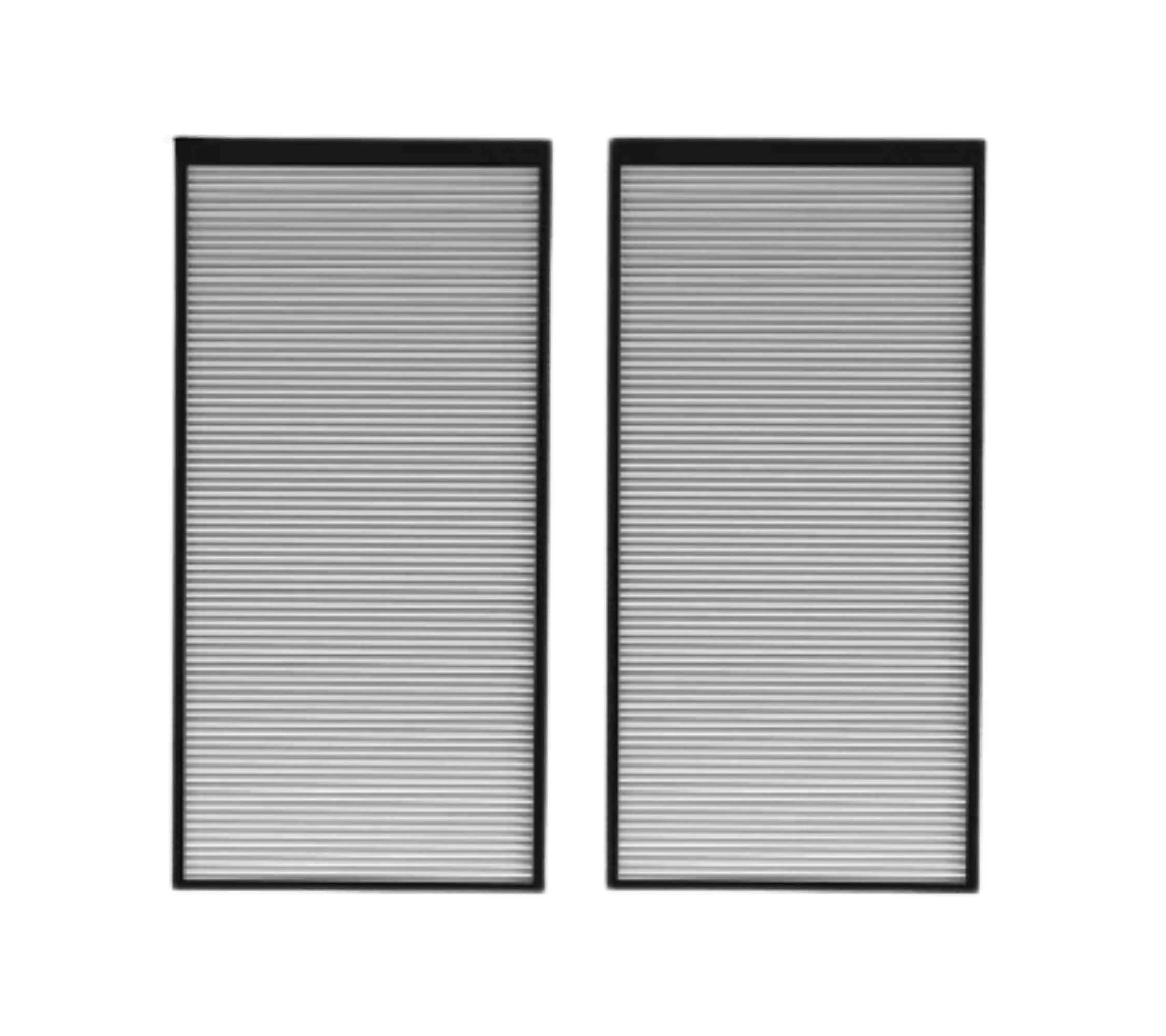
HEPA filters function mechanically by trapping particles within a dense fiber and/or glass matrix. As they collect particles, resistance to airflow gradually increases—or "clogs up." The EPA emphasizes that filter replacement is important to maintain system performance and airflow [1].
In this arena, longevity depends largely on particulate load. Homes with pets, high outdoor pollution, wildfire smoke exposure, or heavy interior dust will probably require more frequent replacement than homes with relatively low particulate levels.
HEPA filter lifespan depends on:
- The concentration and size of airborne particles
- The size of the space being filtered
- The airflow rate of the unit
- How continuously the purifier operates
Unlike carbon filters, HEPA filters do not saturate chemically. They become loaded up and covered with particles. Performance typically declines as airflow resistance increases, rather than because of chemical exhaustion. But at least it's performance you can see.
Why Some Indoor Air Problems Require Both
Indoor environments contain both particles and gases. Whether you want those particles and gases there is your business.
For example:
- Cooking can produce particulate matter as well as odor-causing gases.
- Cleaning products can release VOCs.
- Wildfire smoke contains fine particles and gas-phase pollutants.
There's a clear distinction—particle filtration requires HEPA-level filters, while vapor and gas removal requires sorbent media such as activated carbon [1]. That's why many air cleaning systems combine both technologies.
You need HEPA when:
- You want to reduce airborne particles such as dust, pollen, pet dander, or smoke.
You need activated carbon when:
- You want to reduce odors or certain chemical vapors.
You need both when:
- Your indoor air contains a mixture of unwanted particles, vapors, and gases.
A HEPA filter alone will not remove chemical smells. A carbon filter alone will not capture fine dust. Understanding this division of labor helps clear up expectations—as well as your air quality.
Practical Takeaways
When evaluating filtration type, performance, and longevity—context matters. The answers as they relate to either filter type are directly influenced by what's already floating around in your air (and whether or not you want it to keep doing that).
Key considerations include:
- Indoor pollutant levels
- Ventilation patterns
- Product usage, such as cleaning sprays or candles
- Outdoor air quality
Like the air purifiers that house them, filters are tools designed for specific tasks. Matching the purifier to the pollutant is the most reliable way to support effective indoor air management.
In the HEPA vs activated carbon discussion, the right answer is often not either-or. It's about really understanding what problem you're solving, and selecting the solution/s accordingly.
References
- U.S. Environmental Protection Agency. Guide to Air Cleaners in the Home [Internet]. US EPA; 2022. Available from: https://www.epa.gov/indoor-air-quality-iaq/guide-air-cleaners-home.
- Balieu E, Bjarnov E. Activated carbon filters in air cleaning processes--II. Prediction of breakthrough times and capacities from laboratory studies of model filters. The Annals of occupational hygiene. 1990;34(1):1-11. doi:10.1093/annhyg/34.1.1.
- U.S. Environmental Protection Agency. Volatile Organic Compounds' Impact on Indoor Air Quality [Internet]. US EPA; 2014. Available from: https://www.epa.gov/indoor-air-quality-iaq/volatile-organic-compounds-impact-indoor-air-quality.










When Good Smells Go Bad: How Synthetic Fragrances Can Affect Your Health
What Really Happens If I Don’t Change My Air Filter?