


Summary
Clean air supports healthier connections with your partner, your kids, and even your pets. Poor indoor air quality (IAQ) disrupts sleep, increases irritability between partners, triggers allergies in children and pets, and prevents closeness—if you're allergic to your pet, for example. Keeping the air in your home clean can improve sleep quality, reduce stress hormones, and create a more comfortable environment. Investing in an indoor air purifier is an act of care that benefits everyone you love by removing invisible obstacles to connection and wellbeing.
In This Article
Did you know romantic partners share breathing patterns when they're together? A series of studies conducted by Emilio Ferrer, a UC Davis psychology professor, discovered that couples connected to respiration and heart rate monitors naturally sync their heart rates. Frank Chester also addresses this idea, discussing resonating vortex patterns. Plus, they breathe in and out at the same intervals. [1] [2]
This got us air nerds thinking: If the air around you and your partner is filled with irritants, pollutants, and allergens, that shared experience of harmonious breathing isn't doing either of you any favors. Indoor air quality (IAQ) affects more than just your respiratory health. It plays a direct role in your sleep, your mood, your mental clarity, your stress levels, and ultimately, affects your relationships with the people (and pets) you love.
Let's dive into a few of the biggest ways clean air can help you create healthier, happier connections.
With Your Romantic Partner
Sleep Better, Get Along Better
Plenty of studies have linked clean air with better sleep quality. One review found that "existing published literature examining the relationship between air pollution exposure and sleep outcomes reports an overall adverse effect of various pollutants on sleep across the life course." [2] That's a fancy way of saying: No matter how old you are, pollutants floating around in your air make it much harder for you to get a good night's rest.
The air quality in your bedroom matters most. But cooking oil fumes in your kitchen, volatile organic compounds (VOCs) from air fresheners in your living room, and cleaning chemicals used to scrub surfaces in your bathroom can all impact your nighttime sleep, too. [2]
We've probably all learned this the hard way at one point or another, but when you or your partner—or both you and your partner—don't sleep well, you're more likely to bicker. That's because, scientifically speaking, good sleep quality and relationship satisfaction go hand in hand. Intimate relationships improve sleep and vice versa. [3]
Amie Gordon, a UC Berkeley psychologist and lead investigator of a study about the impact of sleep habits on gratitude, explains, "Poor sleep may make us more selfish as we prioritize our own needs over our partner's." When we're exhausted, we're less observant of our partner's mood, sensitivities, and stressors. [4]
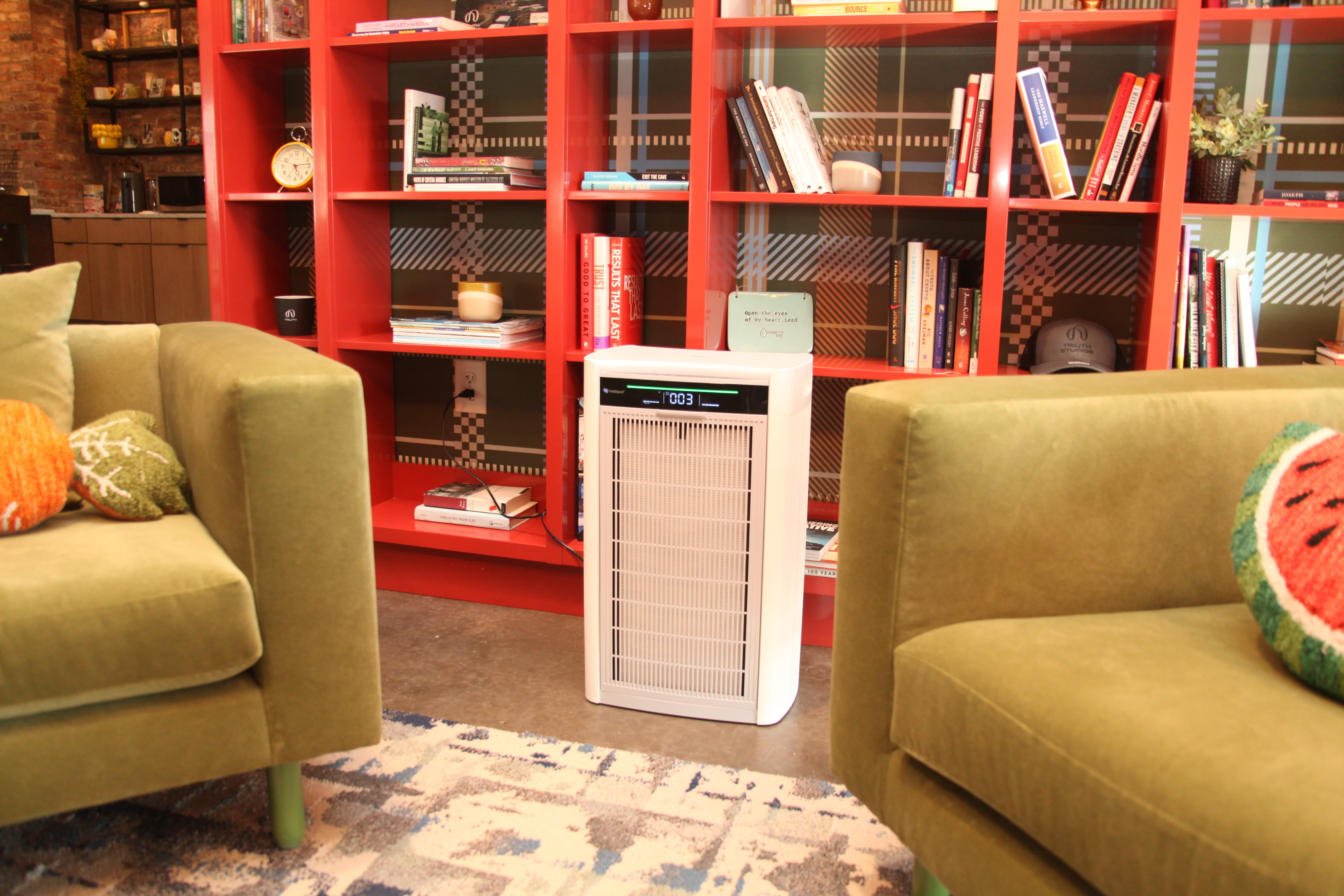
Fortunately, you can improve your sleep performance. Reducing exposure to particulate matter (PM) in your bedroom and throughout your home, using an indoor air cleaner like a portable or whole-home purifier, has been proven to help with snoring, lessen the severity of obstructive sleep apnea (OSA), and promote good sleep. Additionally, maintaining proper nasal breathing instead of mouth breathing during sleep can further enhance sleep quality, as research by experts like James Nestor has shown. [5]And, yes, air purifier noise for sleep is a thing. The soothing hum is a bonus for people who have trouble drifting off.
Create an Inviting Space for the Two of You
Have you ever heard the phrase, "A clean home is a happy home"? Well, that goes for air, too.
Just like a stack of grimy dishes in the sink or a pile of miscellaneous papers plopped on the desk, polluted air negatively impacts our mood, behaviors, and even our stress levels. Research connects PM with multiple adverse health outcomes.
Thankfully, a study published by American Heart Association Journals shows that indoor air purification can turn things around. Using an indoor air purifier can lead to short-term reductions in stress hormones. [6]Once your home becomes a haven of fresh, clean air, you and your partner will sleep better, feel better, and get along better—with every breath you take. (Yes, we went for the 80s pop reference. It's Valentine's Day. Cut us some slack.)
With Your Kids
Protect Their Health
Children's developing bodies make them especially susceptible to indoor air pollution. Compared to adults, they inhale more air relative to their size. And because they tend to spend lots of time playing on the floor, where pollutants settle and get stirred up, they're exposed to higher levels of airborne contaminants. For all these reasons, poor air quality in your home can significantly affect their health and comfort during their most critical growth years. [7]
Pet dander, dust mites, and molds are some of the more common triggers for allergies and asthma in children. To mitigate these irritants and reduce allergens in your home, be sure to use an air purifier and also have a regular cleaning routine in place. [8] Try getting the kids involved! Even toddlers might feel empowered if you let them help with simple cleaning and tidying tasks.
Remind Them How Much You Care About Them
An air purifier doesn't take up a lot of space, but using one speaks volumes. It's solid, tangible proof that health is important to you. That means your health and the health of everyone who lives in and visits your home. Investing in a purifier shows your kids how much their lung health and general wellbeing matter to you. Studies indicate that improved indoor air quality can reduce respiratory-related emergency room visits and decrease overall healthcare costs for families [1].When you consider modeling health-conscious behaviors, running an air purifier teaches your children how to prioritize health and clean air in their future homes. It may also influence them to make healthier day-to-day choices and take better care of themselves.
With Your Pets
Manage Allergens and Odors That Create Distance
Sometimes we keep those we love most at arm's length. Especially when we're allergic to them.
If your cat, dog, bunny, guinea pig, or other furry companion makes you sniffle and sneeze every time you get close to them, then you're constantly having to choose between your bond with them and your own comfort. Fortunately, even with allergies, you can still snuggle, spend quality time, and even sleep in the same room as your pet. You just have to clear the air of pet dander.
According to the Asthma and Allergy Foundation of America (AAFA), running an air purifier in your home for at least four hours a day can help clean and reduce allergens from pets. [9] Even if you don't have pet allergies, the purifier can help neutralize odors from wet fur, litter boxes, and general pet stench.Keep Your Pet Healthy and Happy
If you love your pet, you want to help them live their best life. That includes keeping them healthy, both physically and emotionally.
Dogs and cats can suffer from asthma and respiratory issues from poor IAQ, too. Like babies and toddlers, they're closer to the ground than we humans are, so they have a higher exposure to pollutants and particulate matter (PM) that settle in rugs, carpets, and other flooring. [10] Brachycephalic—snub-nosed or flat-faced—breeds, like bulldogs, pugs, and Persian cats, are especially vulnerable to polluted air. [11]
Like people, some pets are just extra sensitive to dust, pollen, and household chemicals, causing them to scratch or lick excessively. Cleaning the air in your home can reduce respiratory irritants that trigger these coping behaviors, which, in turn, can help lower your pet's stress levels.
A healthier, less anxious pet means fewer vet visits, less stress for them and you, and better companionship. Your pet might not be able to say thank you for keeping the air they breathe fresh and danger-free, but they'll almost definitely find a way to show it.
Love Is in the Air
So this Valentine's Day, before you default to flowers and chocolates, consider a gift that will help everyone in your home feel their best and feel the love.
Oh, and one last thing…
There's a really important relationship we haven't mentioned yet: the one you have with yourself. When it comes to self-care, what could be more foundational than making sure the air you breathe is safe and fresh?
It might be time to treat yourself to an air purifier that fits your life. (Or better yet, drop a hint to someone who's shopping for you.)
References
- Nikos-Rose K. Lovers' hearts beat in sync, UC Davis study says [Internet]. 2013. Available from: https://www.ucdavis.edu/news/lovers-hearts-beat-sync-uc-davis-study-says.
- Liu J, Wu T, Liu Q, Wu S, Chen JC. Air pollution exposure and adverse sleep health across the life course: A systematic review. Environmental Pollution. 2020;262:114263. doi:10.1016/j.envpol.2020.114263.
- Schlarb AA, Claßen M, Schuster ES, Neuner F, Hautzinger M. Did You Sleep Well, Darling?—Link between Sleep Quality and Relationship Quality. Health. 2015;7(12):1747-1756. doi:10.4236/health.2015.712190.
- Anwar Y. Poor sleep can leave romantic partners feeling unappreciated [Internet]. 2013. Available from: https://news.berkeley.edu/2013/01/19/sleep-couples/.
- Lappharat S, Taneepanichskul N, Reutrakul S, Chirakalwasan N. Effects of Bedroom Environmental Conditions on the Severity of Obstructive Sleep Apnea. Journal of Clinical Sleep Medicine. 2018;14(4):565-573. doi:10.5664/jcsm.7046.
- Li H, Cai J, Chen R, Zhao Z, Ying Z, Wang L, Chen J, Hao K, Kinney PL, Chen H, Kan H. Particulate Matter Exposure and Stress Hormone Levels. Circulation. 2017;136(7):618-627. doi:10.1161/circulationaha.116.026796.
- Indoor Air Quality in Your Home [Internet]. California Childcare Health Program, UCSF School of Nursing; 2025. Available from: https://cchp.ucsf.edu/resources/fact-sheets-families/indoor-air-quality-your-home.
- Borman A. How a Clean Home Environment Supports Children’s Mental and Physical Health [Internet]. 2025. Available from: https://americanspcc.org/how-a-clean-home-environment-supports-childrens-mental-and-physical-health/.
- Asthma and Allergy Foundation of America. Allergic to Your Pet? Learn About Dog and Cat Allergies [Internet]. Asthma & Allergy Foundation of America; 2022. Available from: https://aafa.org/allergies/types-of-allergies/pet-dog-cat-allergies/.
- Marsella R. Theories and mechanisms of environmental factors that cause allergies in dogs: veterinarian involvement in lifestyle choices to support long-term well-being. American Journal of Veterinary Research. 2026;87(1). doi:10.2460/ajvr.25.07.0275.
- Scott D, Anderson A, Abrams K, Long M, Ford B, Magzamen S, Duncan C. Dog owners are concerned about ambient air quality and require veterinary guidance. Journal of the American Veterinary Medical Association. 2026;264(2):1-10. doi:10.2460/javma.25.02.0124.









Lessons About Wildfire Smoke, One Year After the Los Angeles Fires
Allergen Report: What's in the Air This October