

Summary
We love our pets. We love their little routines, their tiny dramatic sighs, their oddly specific favorite spots around the house. What we don't love quite as much?
We love our pets. We love their little routines, their tiny dramatic sighs, their oddly specific favorite spots around the house. What we don't love quite as much? The fur tumbleweeds, the mystery smells, and the microscopic particles they leave behind.
Pets are part of the family, but they're also part of your home's ecosystem, just like you are. Dogs, cats, and other furry companions can contribute to airborne allergens, dust, particles, and odors that build up inside, especially in homes where windows stay closed, cleaning gets delayed, or pets have full access to every soft surface in sight.
The good news is that you don't have to choose between cleaner air and the furry friend currently taking up 80% of your bed. With the right habits, a little consistency, and the right air purifier for pets, you can make your home feel fresher for everyone who shares your air.
What is pet dander, exactly?
Pet dander is not the same thing as pet hair. Hair is the visible stuff you find on your leggings five minutes after using a lint roller. Dander is made up of tiny skin flakes shed by animals [1]. Because these particles are so small and lightweight, they can easily move through the air, settle into dust, and collect on furniture, bedding, rugs, and other surfaces.
Pet allergens are a little broader than dander alone. Allergens from cats and dogs can also come from saliva, skin, and other secretions, which can then attach to hair, dust, and airborne particles. A recent review of indoor environmental exposures lists cat and dog allergens among the major indoor allergens associated with allergic disease, alongside dust mites, cockroaches, mice, and mold [2].
That doesn't mean every pet owner will experience symptoms. It does mean pet allergens are worth taking seriously as part of your overall indoor air quality plan.
Why shedding season can feel like everything season
Shedding is easy to see, so it gets most of the blame. But the bigger issue is what travels with it.
When pets shed, they can spread hair, dander, dust, pollen, and other particles throughout the home [2]. Pets that go outside can also bring outdoor allergens back in on their paws and coats. Then, everyday activity keeps everything moving. Walking across the carpet, fluffing a blanket, opening a door, or having a round of living room zoomies can send settled particles back into the air.
And pet allergens are surprisingly good travelers. One study found dog allergens in dust and several domestic allergens in the air of public buildings, even though those environments were not pet homes [3]. In other words, these particles don't always stay where they started. They can move on clothing, cling to surfaces, and show up in even far-flung shared spaces.
This is why a home can feel sort of "pet-heavy" even after you vacuum. Vacuuming helps, but soft surfaces, upholstery, bedding, and airborne particles all play a role.
How pets can affect indoor air quality
Pets can influence indoor air quality in a few everyday ways:
They add particles to the air. Dander, hair, and dried saliva proteins can become part of household dust and airborne particles.
They increase surface buildup. Rugs, couches, curtains, and bedding can hold onto allergens and odors.
They bring the outside in. Pollen, dirt, mold spores, and other outdoor particles can hitch a ride on paws and fur.
They create odor sources. Litter boxes, bedding, crates, accidents, wet fur, and food areas can all affect how fresh a room feels.
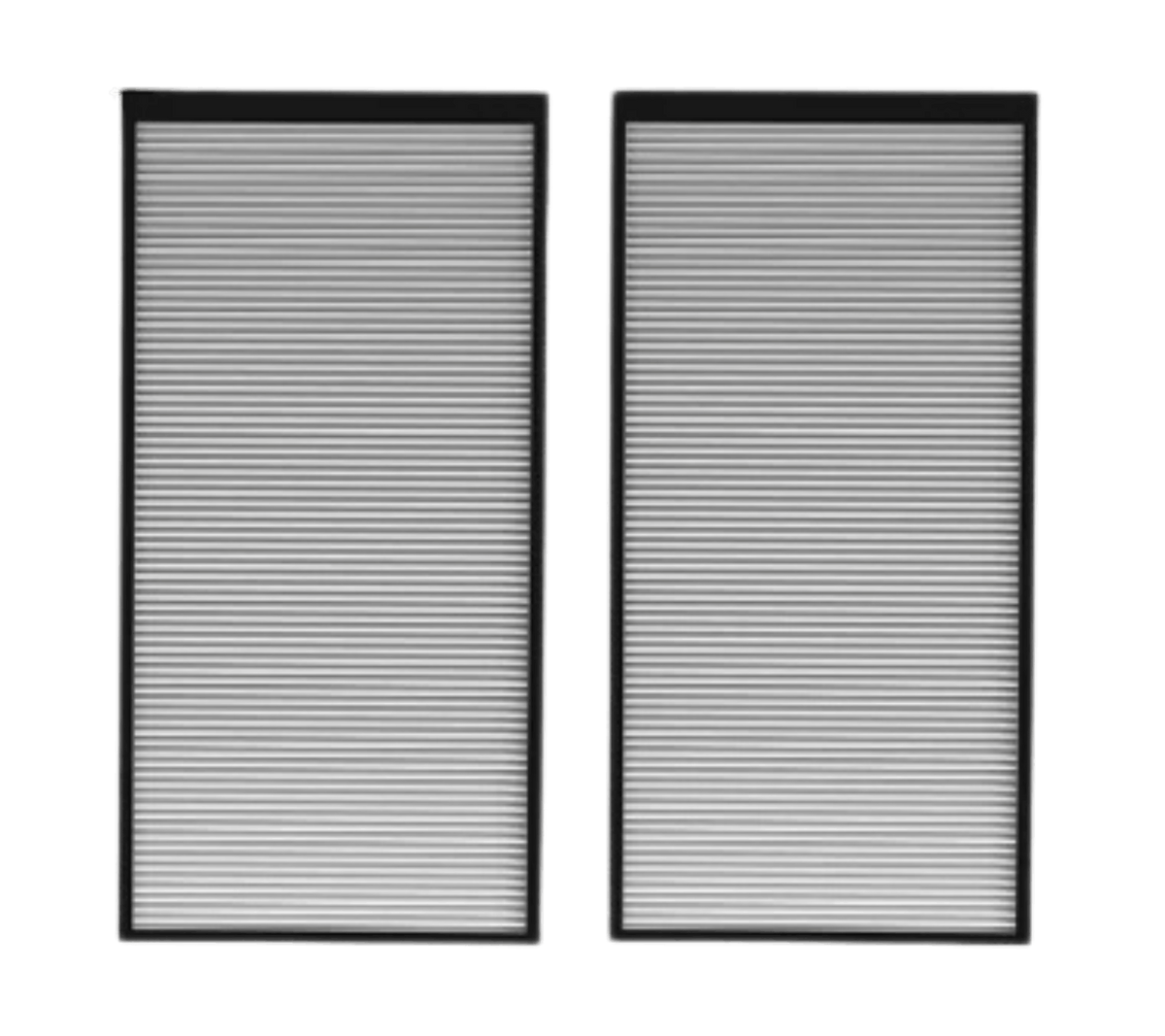
They make filters work harder. More hair, dust, and pet dander means your purifier filter has more to capture.
None of this means your pet is "making your air bad." It just means pet homes have a different indoor air profile than pet-free homes. The solution is not to panic. It's to create a smarter routine.
Simple ways to manage pet allergens at home
A cleaner-air routine for pet homes works best when it's realistic. You don't need to deep clean the house every day or follow your dog around with a vacuum. Start with the habits that reduce buildup at the source.
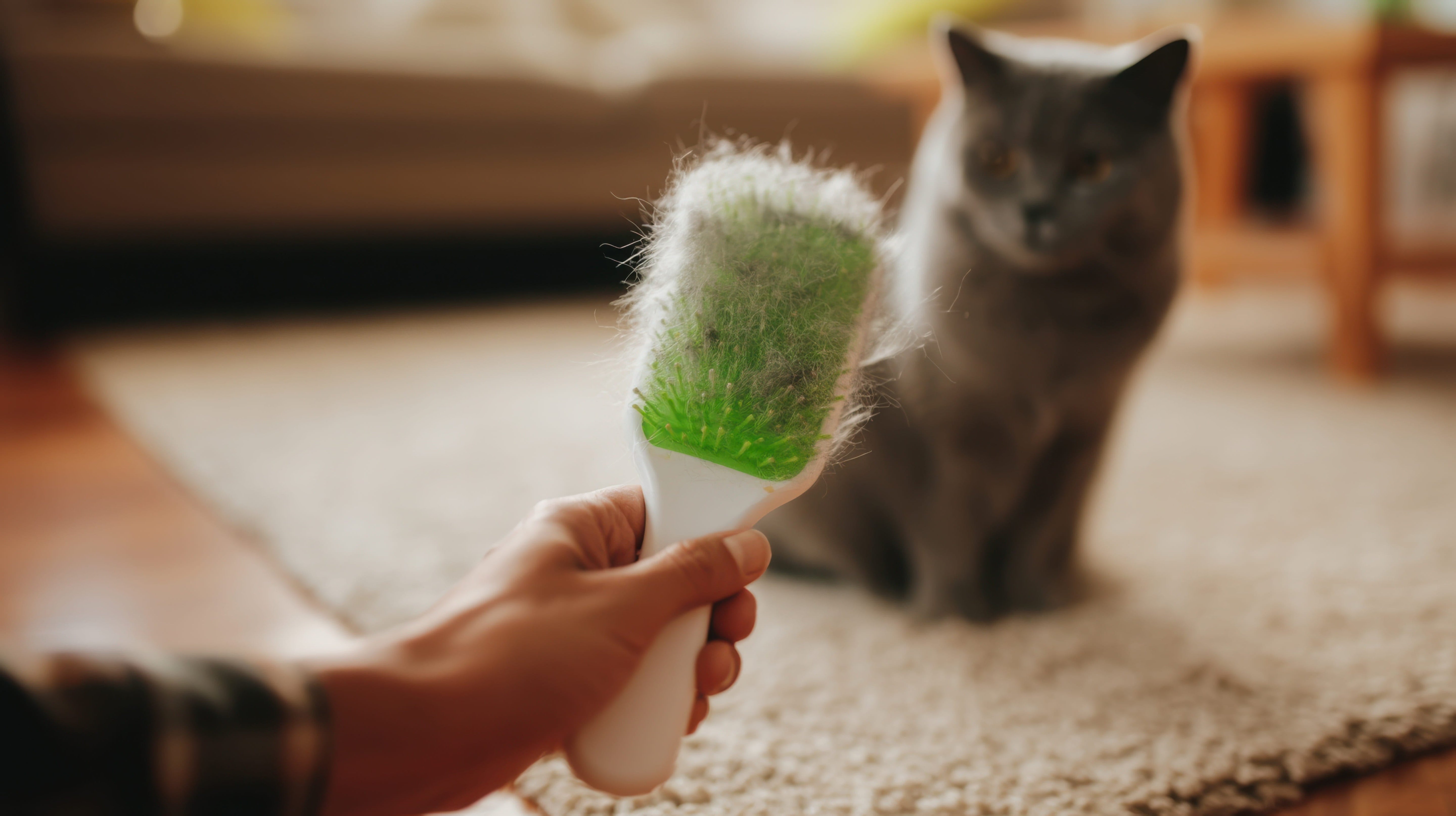
- Brush pets regularly, ideally outdoors or in an easy-to-clean area. This helps collect loose hair before it spreads around the house.
- Wash pet bedding often. Beds, blankets, crate mats, and favorite nap spots can hold onto hair, dander, and odors.
- Vacuum rugs, carpets, and upholstered furniture consistently. If your pet has a favorite chair, assume it needs extra attention.
- Wipe paws after outdoor walks. This is a small step, but it can help reduce the amount of dirt and outdoor particles tracked inside. Try stashing a designated cloth or a pack of pet wipes near the door.
- Keep litter boxes and pet feeding areas clean. Odor control is part of indoor air quality, too.
- Create a cleaner sleep zone. If someone in the home is sensitive to pet allergens, consider keeping pets out of the bedroom or at least off pillows and bedding. In a study on airborne dog allergens, HEPA air cleaners reduced airborne Can f 1 (a protein in dogs' saliva that spreads to their hair, skin, and dander) in homes with dogs, and the authors noted that limiting dog access to bedrooms, and possibly living rooms, may reduce inhaled allergen load [4].
Can an air purifier help with pet dander?
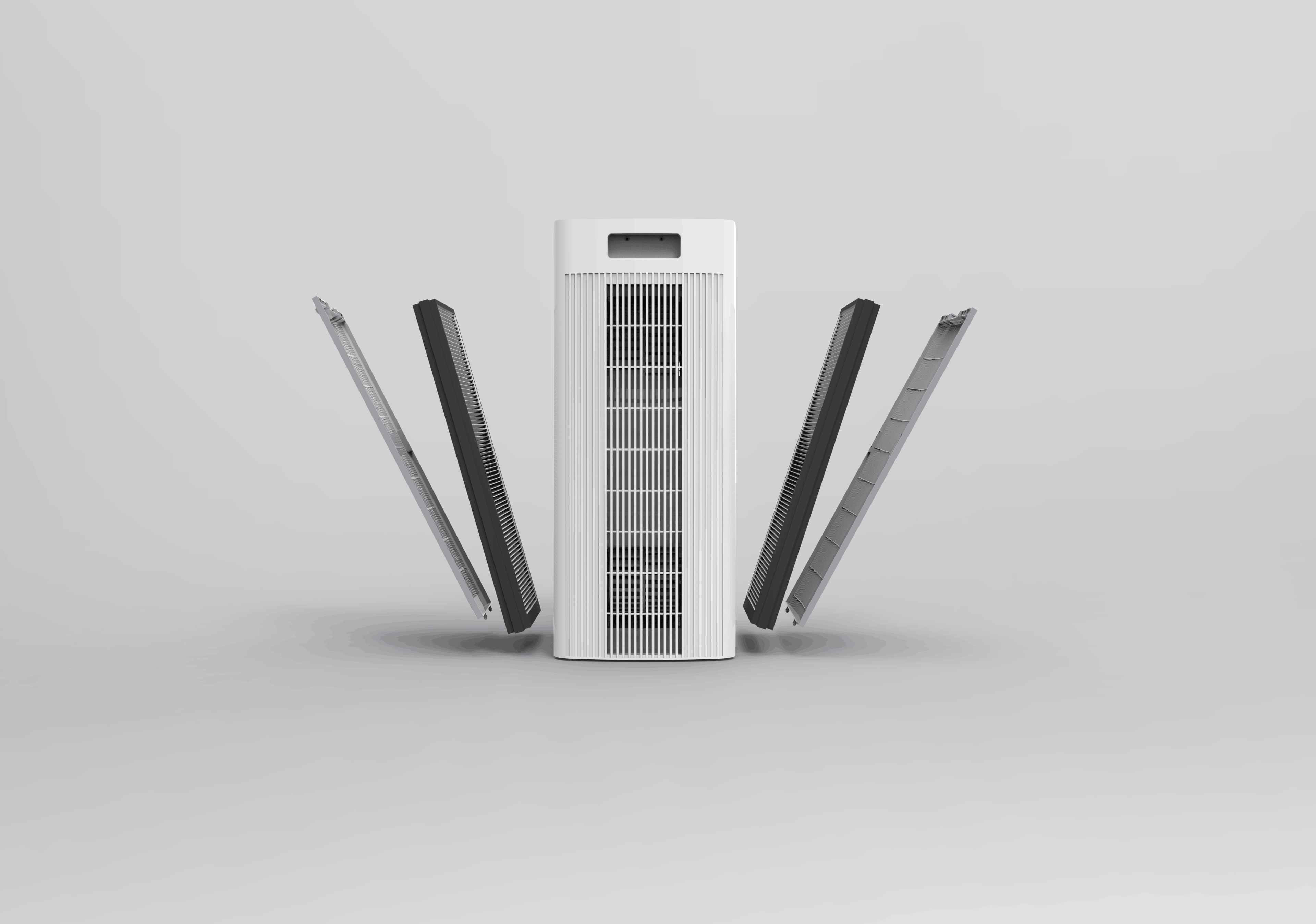
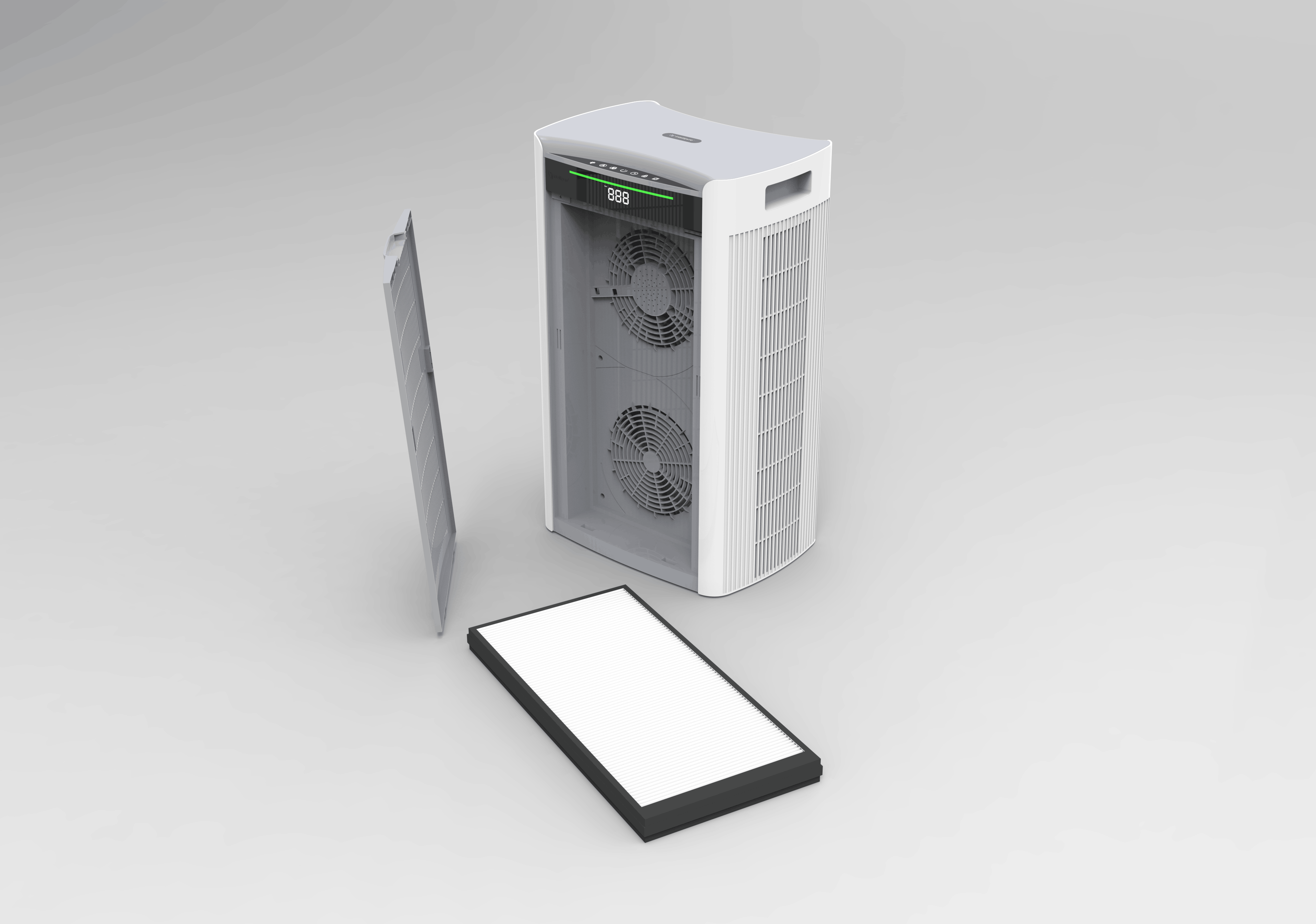
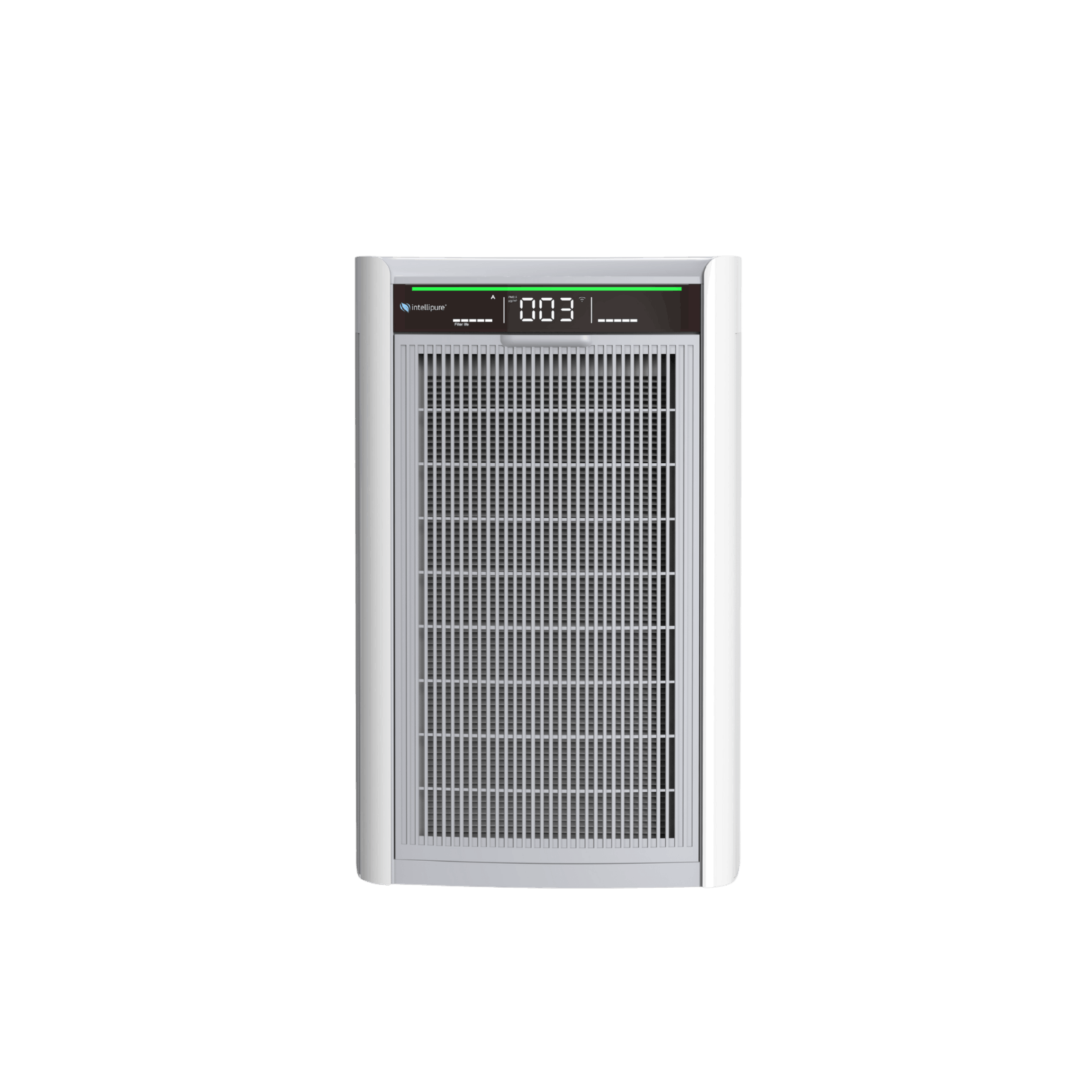
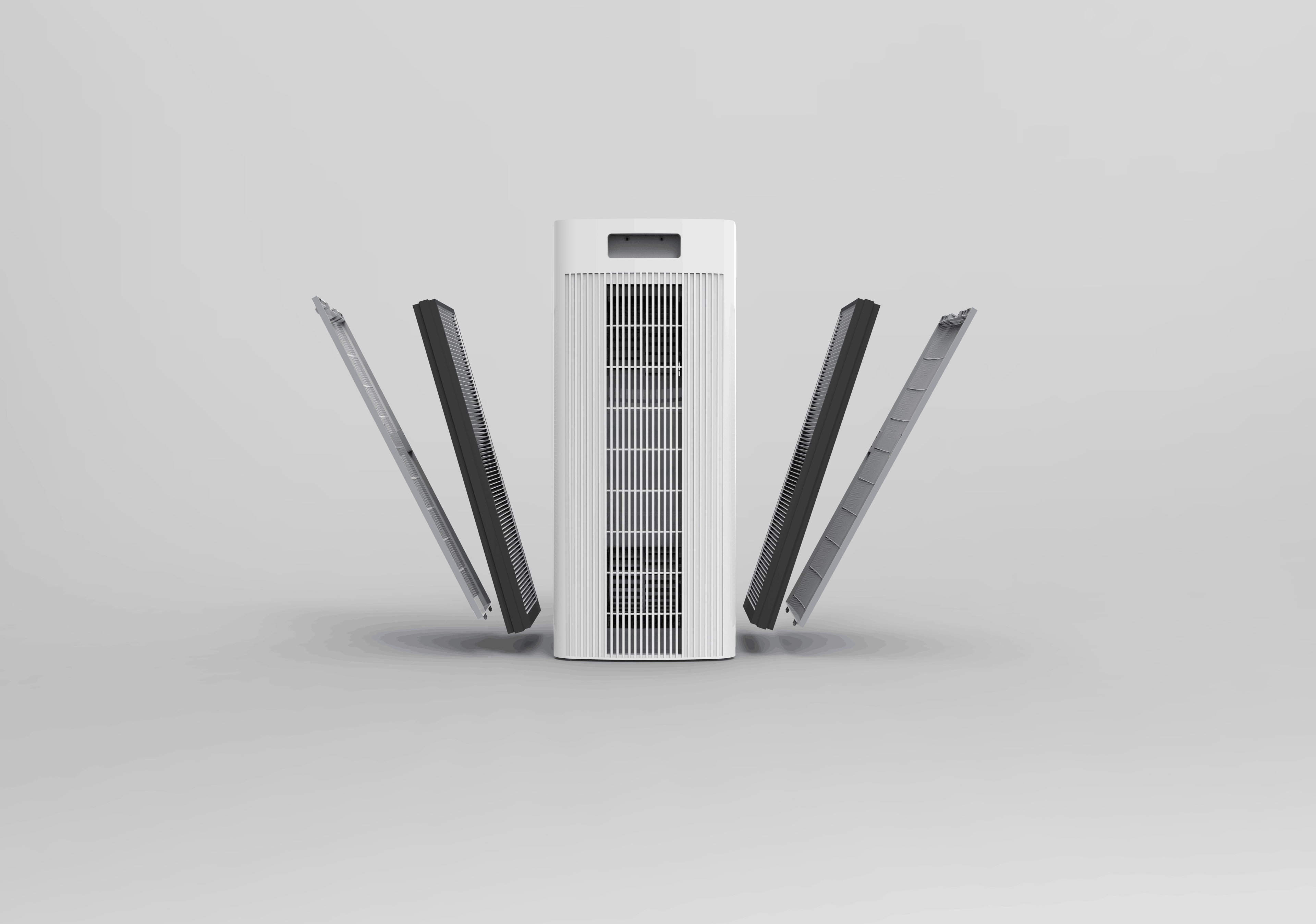
An air purifier can absolutely help reduce airborne pet-related particles, as long as it's designed for the space, placed well, and maintained properly.
A 2022 study found that air filtration reduced house dust mite, cat, and dog allergens, along with particulate matter, in indoor air [1]. That matters because airborne allergens are the particles you're most likely to breathe in, especially in rooms where pets spend a lot of time.
Think of an air purifier as part of the routine, not the whole routine. It won't stop your cat from shedding on the black sweater you planned to wear. It won't replace vacuuming, washing bedding, or cleaning the litter box. But it can help capture airborne particles that are too small or too persistent for surface cleaning alone.
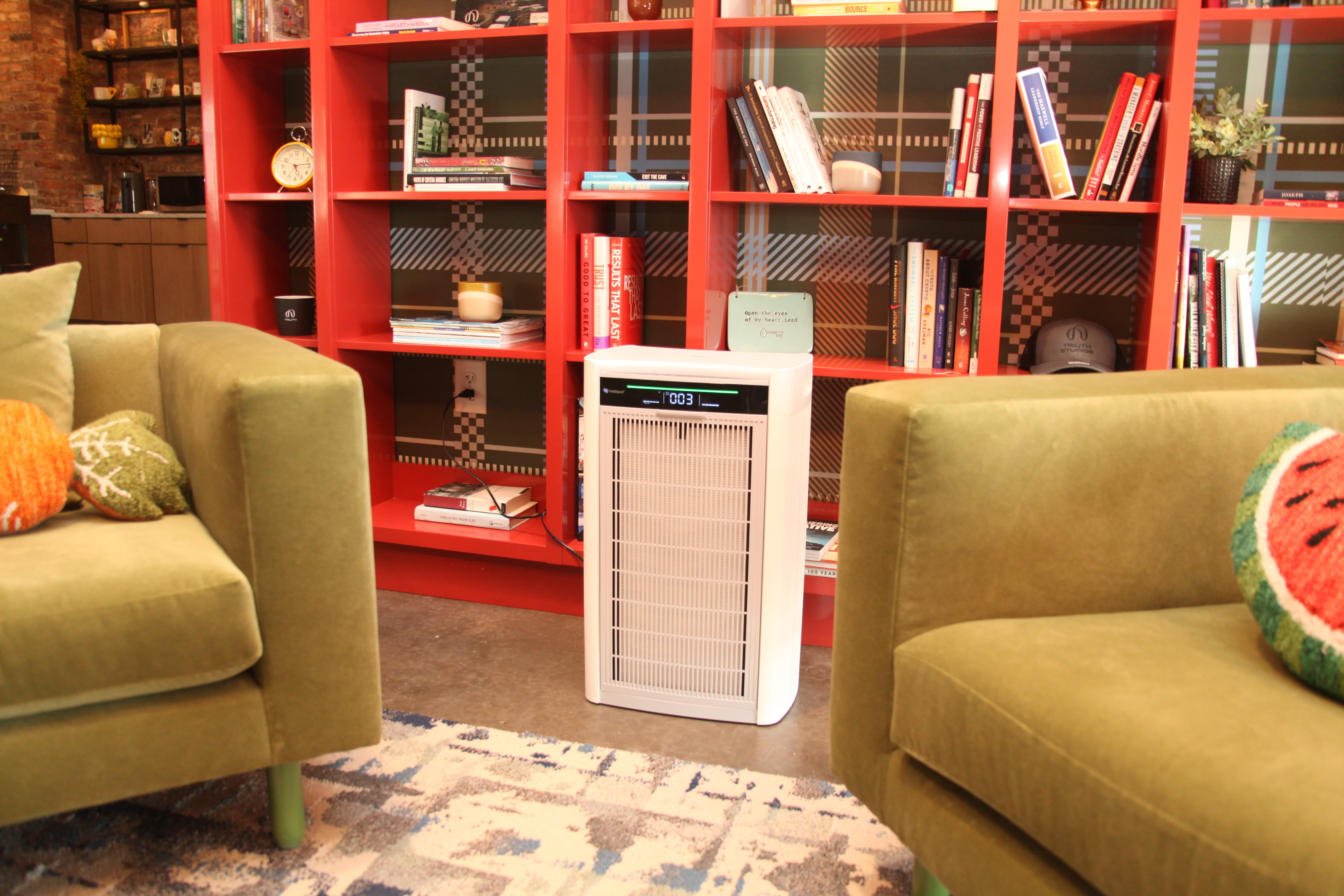
For best results, place your purifier in the room where your pet spends the most time (you know their favorite hangouts), or where you spend the most time with your pet. Bedrooms, living rooms, and home offices are usually good places to start.
How often should you change an air purifier filter with pets?
This is one of the most important questions pet owners ask: How often should I change an air purifier filter with pets? The honest answer is: Follow the manufacturer's recommendation first, then adjust based on your home's IAQ.
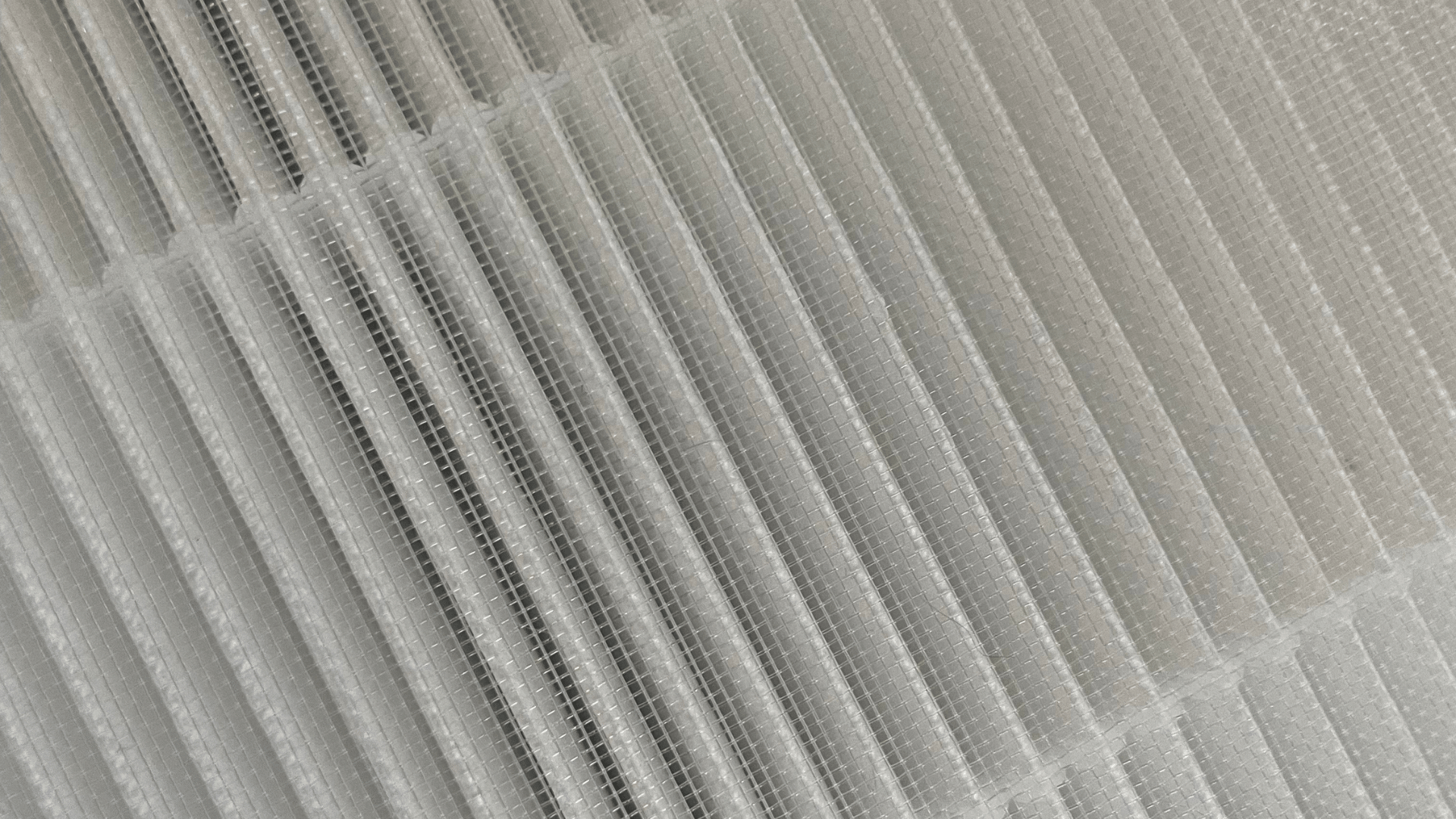
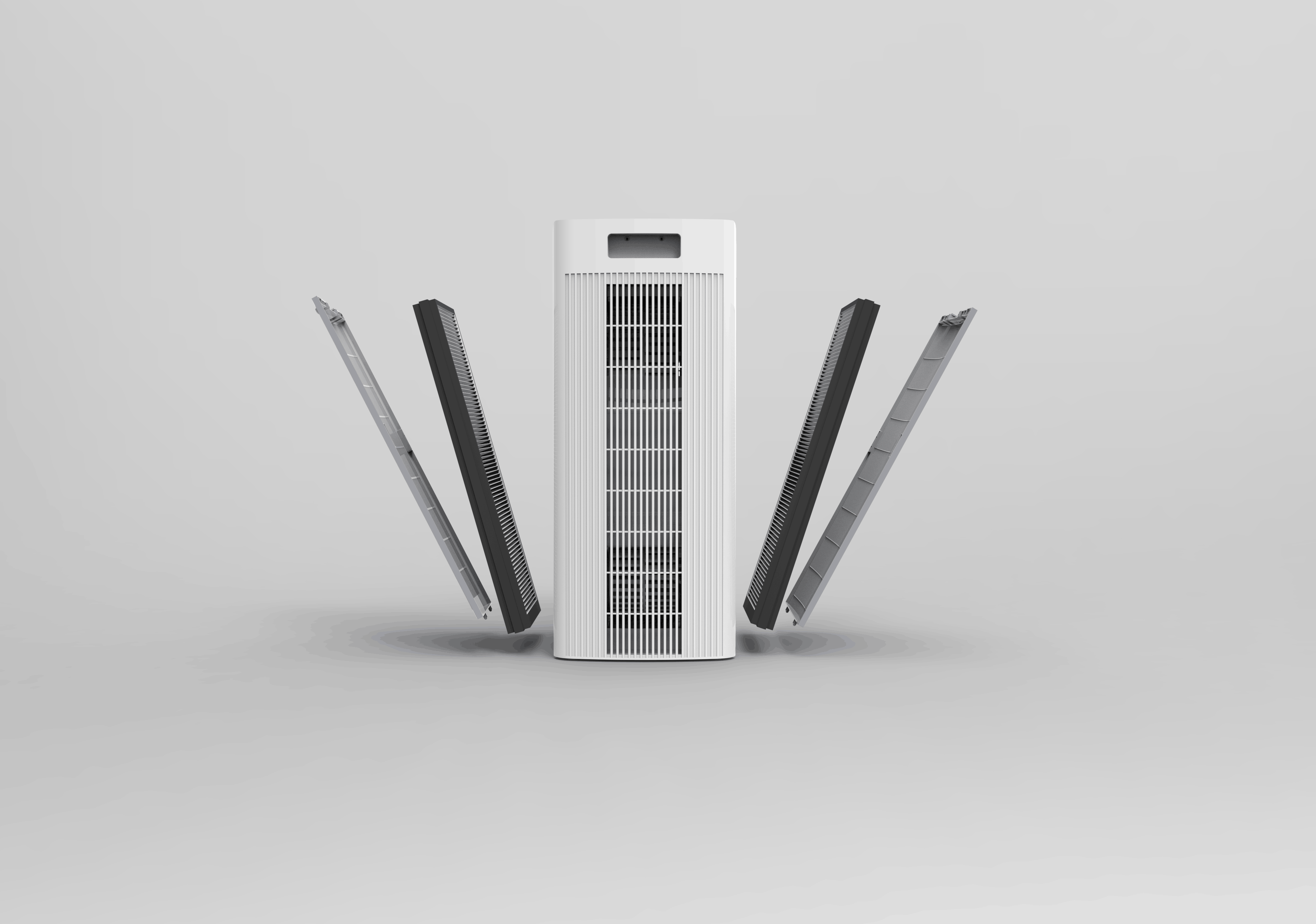
Pet homes can load filters faster because there's simply more material in the air. Homes with multiple pets, heavy shedders, long-haired breeds, litter boxes, carpet, or high foot traffic may need more frequent filter checks. If your filter looks visibly dirty, your purifier seems less effective, or odors are lingering longer than usual, it may be time to replace it.
A good rule of thumb: Don't wait until the air feels stale. Filter maintenance works best when it's proactive. Cleaner filters help your purifier do what it's there to do, which is keep air moving through the system and keep captured particles where they belong.
Cleaner air for every member of the family
Pets make a house feel more alive. More like a home, some would say. They also make it a little hairier, a little dustier, and sometimes a little smellier. Fair trade? Absolutely. But that doesn't mean you have to live with the extra particles floating around.
Managing pet dander and pet allergens is about building a steady, simple routine: Groom the pet, clean the surfaces, wash the bedding, run the purifier, and change the filter when it's time. Nothing dramatic. Because at the end of the day, the goal isn't a perfect, pet-free bubble. It's a home where everyone can breathe a little easier, including the furry family member snuggling (and shedding) on your lap.
References
- Maya-Manzano JM, Pusch G, Ebner von Eschenbach C, Bartusel E, Belzner T, Karg E, Bardolatzy U, Scheja M, Schmidt-Weber C, Buters J. Effect of air filtration on house dust mite, cat and dog allergens and particulate matter in homes. Clinical and translational allergy. 2022;12(4):e12137. doi:10.1002/clt2.12137.
- Grant TL, Wood RA, Chapman MD. Indoor Environmental Exposures and Their Relationship to Allergic Diseases. The journal of allergy and clinical immunology. In practice. 2023;11(10):2963-2970. doi:10.1016/j.jaip.2023.08.034.
- Custovic A, Green R, Taggart SC, Smith A, Pickering CA, Chapman MD, Woodcock A. Domestic allergens in public places. II: Dog (Can f1) and cockroach (Bla g 2) allergens in dust and mite, cat, dog and cockroach allergens in the air in public buildings. Clinical and experimental allergy : journal of the British Society for Allergy and Clinical Immunology. 1996;26(11):1246-52.
- Green R, Simpson A, Custovic A, Faragher B, Chapman M, Woodcock A. The effect of air filtration on airborne dog allergen. Allergy. 1999;54(5):484-8. doi:10.1034/j.1398-9995.1999.00029.x.







Summer Air Myths
Breathing Activities to Help Kids Keep Their Cool