

Summary
Ragweed pollen peaks across the country in September while wildfire smoke threatens western air quality. Here's your region-by-region pollen breakdown and practical tips for keeping indoor air clean as the seasons change.
In This Article
Ragweed Season Is Here
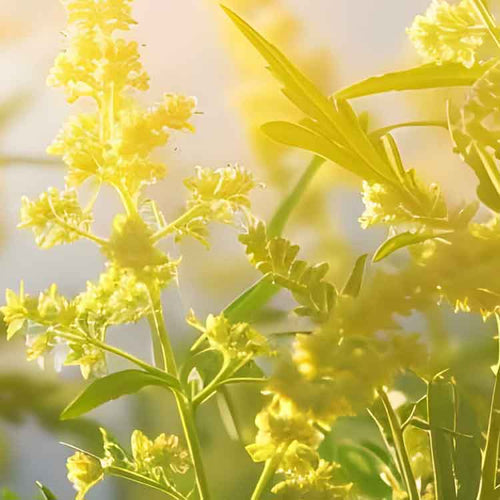
The last warm breezes of summer are blowing across the country, and cooler temperatures are creeping in. Unfortunately, those winds likely carry ragweed pollen. Ragweed is the primary cause of late summer and early fall allergic symptoms, typically flowering from mid-August through September and lasting until the first frost [1]. If you're an allergy sufferer, now is the time to stock up on antihistamines before heading outside for the day.
The good news? Tree pollen and grass pollen are both on the decline in most areas. Trees tend to be the first species to produce pollen in spring, with grasses following through the frost-free season and weeds becoming the predominant pollen source in fall. By September, weed pollen takes center stage, and ragweed is the most abundant weed pollen at many stations across the continent [1]. There's also the ongoing threat of wildfires in the western United States, which can send smoke drifting to communities thousands of miles away, affecting air quality far from the flames [2].
Your Region-by-Region Pollen Breakdown
Here are the typical pollens you can expect across the United States this September [1]:
Northeast
- Tree pollen: Cedar, Juniper
- Grass pollen: Bermuda
- Weeds: Cocklebur, Dogfennel, Ragweed, Sagebrush
Southeast
- Tree pollen: Cedar, Elm, Juniper
- Grass pollen: Bermuda
- Weeds: Cocklebur, Dogfennel, Ragweed, Sagebrush
Midwest
- Tree pollen: Typically none in measurable quantity
- Grass pollen: Bermuda, Johnsongrass
- Weeds: Cocklebur, Marsh Elder, Nettle, Plantain, Ragweed, Russian Thistle, Sagebrush
South Central
- Tree pollen: Elm
- Grass pollen: Bermuda
- Weeds: Cocklebur, Marsh Elder, Nettle, Plantain, Ragweed, Russian Thistle
Southwest
- Tree pollen: Cedar, Elm, Juniper
- Grass pollen: Typically none in measurable quantity
- Weeds: Cocklebur, Ragweed, Sagebrush
Northwest
- Tree pollen: Typically none in measurable quantity
- Grass pollen: Typically none in measurable quantity
- Weeds: Cocklebur, Ragweed, Sagebrush
While cool fall air may be a great reason to throw open the windows, make sure to check your local outdoor air quality first. If outdoor conditions aren't ideal, you can still keep your indoor air fresh and clean.
Cold Weather Brings Indoor Air Challenges
As temperatures drop, windows tend to stay shut, which means less natural ventilation for your home. The EPA notes that inadequate ventilation can increase indoor pollutant levels by failing to bring in enough outdoor air to dilute emissions from indoor sources [3]. Add to that furnaces firing up for the first time in months, and dust that has settled on internal components over the summer can get stirred back into the air.
Digging out stored cold-weather clothes can also release dust and dust mite allergens. Research published in the Journal of Allergy and Clinical Immunology found that clothing can carry significant levels of mite allergen, and garments washed less frequently tend to accumulate higher concentrations [4]. Give everything a good wash before wearing it. The same goes for bedding, so you don't spend your first cold night sneezing into your pillow.
Mold is another concern during the seasonal transition. The EPA warns that mold will grow wherever there is moisture, such as around leaks in roofs, windows, or pipes [5]. Lingering moisture from spring and summer weather can settle into basements and bathrooms, where mold colonies may take hold if surfaces aren't dried within 24 to 48 hours [6]. When cool weather arrives, make sure your home's indoor air is protected.
International Day of Clean Air for Blue Skies
Every September 7th, the world observes the International Day of Clean Air for Blue Skies, designated by the United Nations General Assembly in December 2019 to raise awareness and encourage global collaboration on air quality [7].
The observance highlights a sobering reality: air pollution is one of the greatest environmental risks to human health, according to the World Health Organization [8]. An estimated 6.7 million premature deaths each year are linked to the combined effects of ambient and household air pollution [8].
The health toll is significant. Globally, air pollution is estimated to contribute to approximately 29% of lung cancer deaths, 24% of stroke deaths, and 43% of deaths from chronic obstructive pulmonary disease (COPD) [9]. These tiny pollutants, particularly fine particulate matter (PM2.5), penetrate deep into the lungs and can enter the bloodstream.
Air pollution is also a climate threat. Some pollutants, like black carbon and methane, are classified as short-lived climate pollutants (SLCPs). The Climate and Clean Air Coalition notes that reducing these pollutants can deliver both immediate health benefits and help slow climate change [10].
Developing countries and low-income communities bear a disproportionate share of this burden, with 89% of premature deaths from ambient air pollution occurring in low- and middle-income countries [8]. Children face particular risk, as air pollution is one of the greatest environmental threats to child health [8]. The OECD has projected that without intervention, premature deaths from particulate matter exposure could more than double by 2050 [11].
Tackling air pollution is also an economic issue. Healthcare costs rise and productivity drops when air quality suffers. By investing in air pollution controls, communities can achieve meaningful health and economic benefits. The international community recognizes that clean air is vital not only for public health but for sustainable development and climate action.
Whether you're managing pollen allergies, preparing your home for cooler weather, or simply wanting to breathe easier, taking control of your indoor air quality is a practical step you can take today.
References
- Lo F, Bitz CM, Battisti DS, Hess JJ. Pollen calendars and maps of allergenic pollen in North America. Aerobiologia. 2019;35(4):613-633. doi:10.1007/s10453-019-09601-2.
- United States Environmental Protection Agency. Wildfires and indoor air quality (IAQ) [Internet]. Washington (DC): EPA; 2026 [cited 2026 Feb 13].
- United States Environmental Protection Agency. The inside story: a guide to indoor air quality [Internet]. Washington (DC): EPA; [cited 2026 Feb 13].
- De Lucca SD, O'Meara TJ, Tovey ER. Exposure to mite and cat allergens on a range of clothing items at home and the transfer of cat allergen in the workplace. J Allergy Clin Immunol. 2000;106(5):874-879. doi:10.1067/mai.2000.110804.
- Centers for Disease Control and Prevention. Mold [Internet]. Atlanta (GA): CDC; 2024 [cited 2026 Feb 13].
- United States Environmental Protection Agency. A brief guide to mold, moisture and your home [Internet]. Washington (DC): EPA; 2025 [cited 2026 Feb 13].
- United Nations Environment Programme. International Day of Clean Air for blue skies [Internet]. Nairobi: UNEP; 2024 [cited 2026 Feb 13].
- World Health Organization. Ambient (outdoor) air pollution [Internet]. Geneva: WHO; 2024 [cited 2026 Feb 13].
- World Health Organization. Ambient air pollution [Internet]. Geneva: WHO; [cited 2026 Feb 13].
- Climate and Clean Air Coalition. Short-lived climate pollutant solutions [Internet]. Paris: CCAC; [cited 2026 Feb 13].
- Organisation for Economic Co-operation and Development. OECD environmental outlook to 2050: the consequences of inaction. Paris: OECD Publishing; 2012.


Intellipure May 2024 Allergen Report: What's in Your Air This Spring
Air Pollution and Your Brain: What the Research Says About Cognitive Aging