

Summary
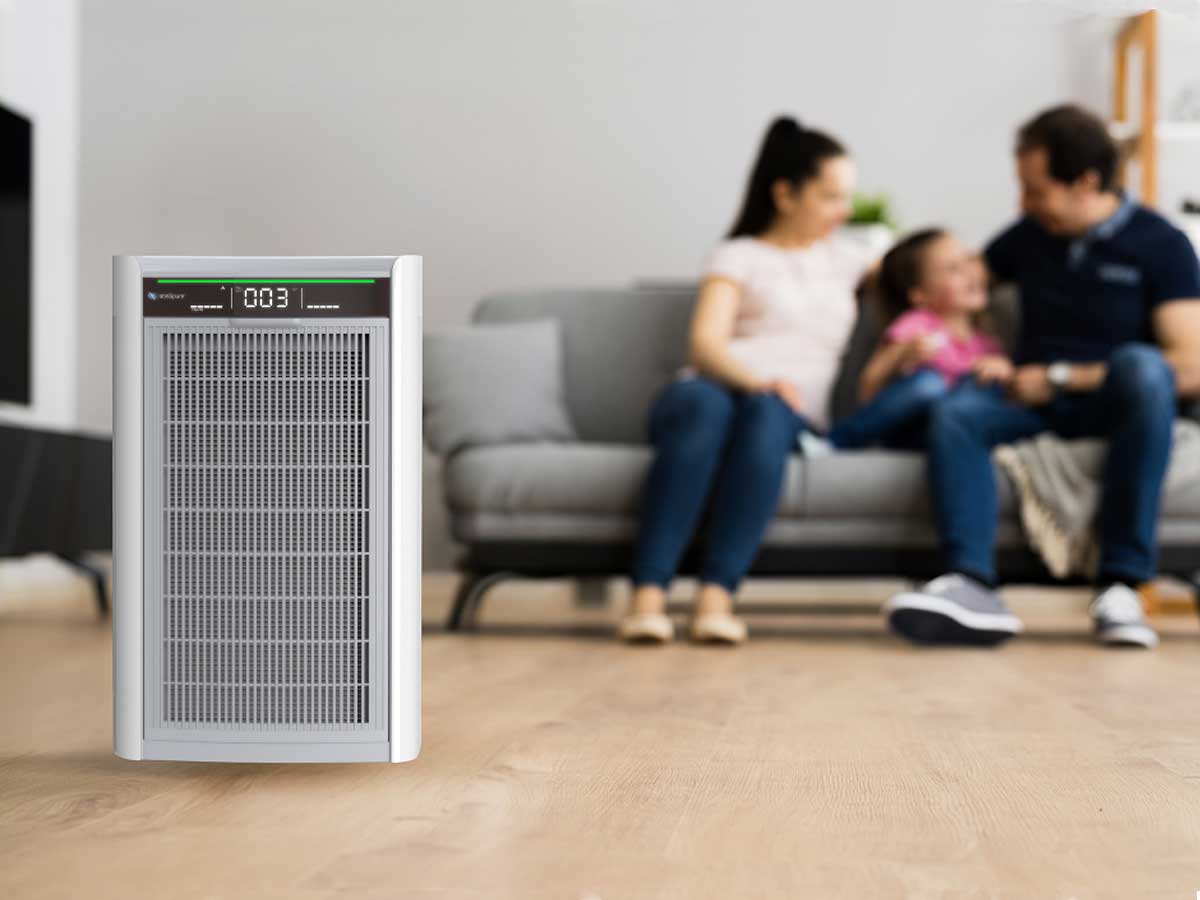
Your air purifier's child lock does more than prevent button-mashing: it keeps indoor air quality consistent, protects the device from unnecessary wear, and gives you one less thing to worry about in a busy household with kids.
In This Article
Little Hands, Big Consequences
You did the research, found the right air purifier, set it up, and dialed in your preferred settings. Then your toddler discovered the glowing buttons on the control panel.
If you have young children at home, you already know they are hardwired to explore. Toddlers learn by touching, pressing, and manipulating everything within reach [1]. That curiosity is wonderful for development, but less wonderful when it means your air purifier gets switched off (or cranked to full blast) while you are in another room.
That is where the child lock feature comes in. It is a small setting that can make a real difference in your home's air quality, your device's longevity, and your peace of mind.
What Is an Air Purifier Child Lock?
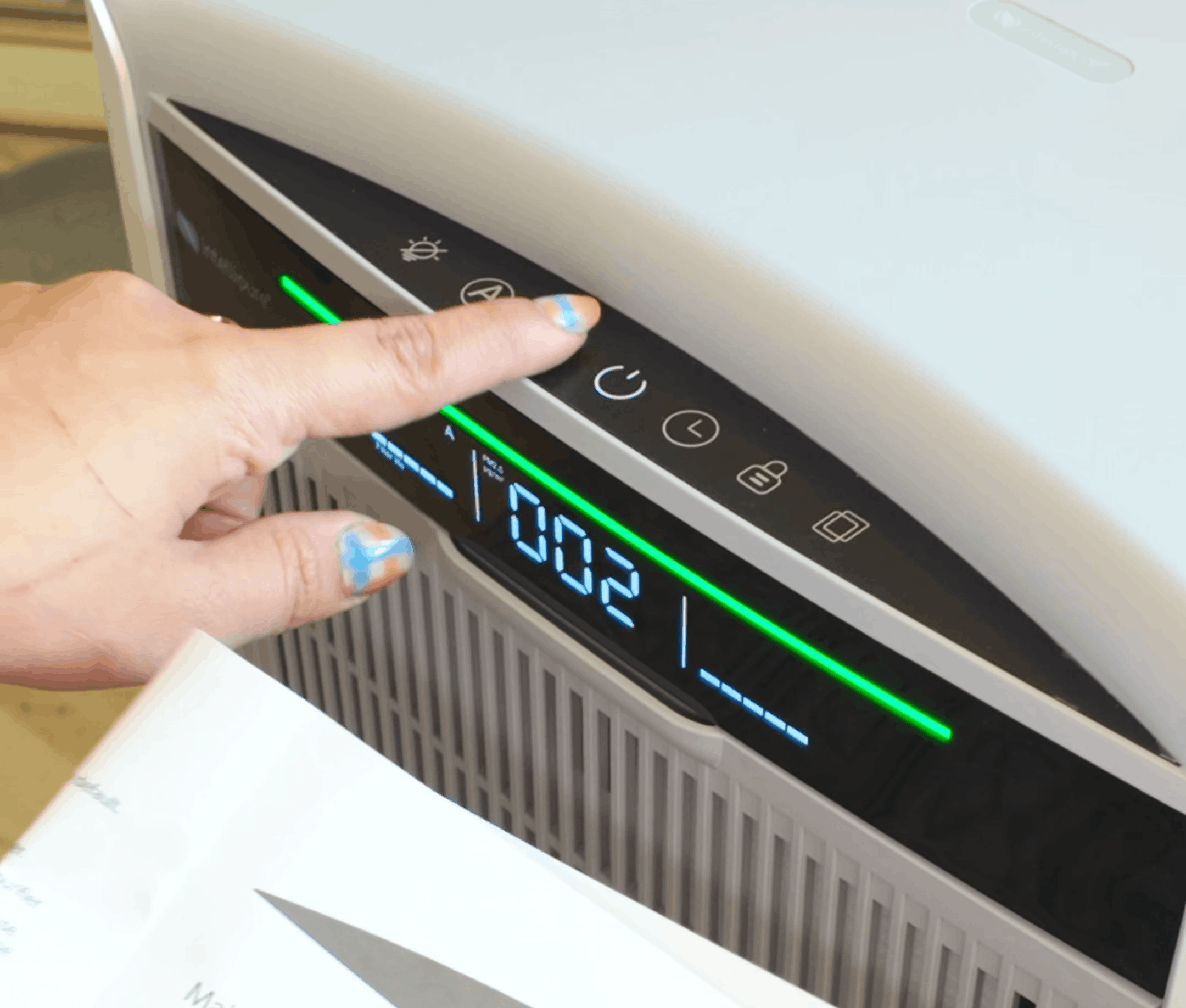
A child lock disables the control panel buttons on your air purifier. The buttons can still be pressed, but nothing happens. Activating and deactivating the lock typically requires a specific button sequence or a long press that a curious toddler is unlikely to figure out.
Keeping Indoor Air Quality Consistent
Here is why consistent operation matters: indoor air can contain concentrations of certain pollutants that are two to five times higher than what you would find outside, according to the EPA [2]. Children are especially vulnerable to those pollutants because their respiratory and immune systems are still developing and they breathe more air per unit of body weight than adults [3].
Research shows that HEPA-equipped air purifiers can reduce indoor particulate matter (PM2.5) concentrations by roughly 34% to 68%, depending on conditions [4]. But that benefit only holds if the purifier stays on and at the right settings. A toddler who discovers the power button can undo all of that in a single press.
Locking the controls keeps your chosen settings in place, so the air your family breathes stays as clean as you intended.
Why It Matters Even More for Sensitive Family Members
If anyone in your household has asthma or allergies, stable indoor air quality is not just nice to have; it is part of managing their symptoms. The CDC reports that approximately 4.5 million children under 18 in the United States currently have asthma [5]. Indoor air pollutants like particulate matter and nitrogen dioxide are linked to increased coughing, wheezing, and chest tightness in children with asthma [6].
A child lock helps ensure that your purifier is not accidentally turned off or set to the lowest fan speed right when consistent filtration matters most, like during allergy season or when outdoor air quality is poor.
Protecting Your Device
Let's be honest: toddlers do not gently press a single button and walk away. They mash every button they can find, often repeatedly. While air purifiers are built to handle normal use, rapid fan speed changes and constant toggling are not exactly what manufacturers have in mind during quality testing.
Using the child lock removes the immediate reward of lights changing and fans speeding up, which means your little explorer will move on to something else. It is a simple way to reduce unnecessary wear on your unit and keep it running smoothly for years.
One Less Thing to Worry About
Parents already have a long childproofing checklist. The U.S. Consumer Product Safety Commission recommends safety latches on cabinets, outlet covers, and anchoring furniture to walls, among other measures [7]. The American Academy of Pediatrics provides detailed home safety checklists covering everything from smoke detectors to furniture anchoring [8].
Your air purifier's child lock fits right into that routine.
How to Use Your Air Purifier's Child Lock
Most air purifiers with a child lock feature make it straightforward to enable. Here is a quick guide:
- Check your owner's manual. Look for the child lock section, which will outline the specific button sequence or long press required to activate it.
- Set your preferred air quality settings first. Dial in the fan speed, mode, and schedule you want before locking the controls.
- Activate the child lock. Follow the steps in your manual. On many models, a small lock icon will appear on the display to confirm it is active.
- If you have a smart purifier, check the companion app for a child lock toggle. Smart purifiers connected to Wi-Fi may let you enable or disable the lock remotely.
- After a power outage, re-check. Some air purifiers reset to factory defaults when they lose power, which means the child lock may need to be re-enabled.
Clean Air, Curious Kids, No Worries
Your air purifier is working hard to keep your home's air clean. A child lock makes sure it keeps doing its job, even when little hands have other plans. It is a small feature with an outsized impact: consistent air quality, a protected device, and one less thing on your to-do list.
With Wi-Fi connectivity, real-time air quality monitoring, and app-based controls, managing your home's air quality (child lock included) is simple.
References
- Nemours KidsHealth. Safe exploring for toddlers [Internet]. Jacksonville (FL): Nemours Foundation; 2021 [cited 2026 Feb 13]..
- United States Environmental Protection Agency. The inside story: a guide to indoor air quality [Internet]. Washington (DC): EPA; [cited 2026 Feb 13]..
- AithalSS, SachdevaI, KurmiOP. Air quality and respiratory health in children. Breathe (Sheff). 2023;19(2):230040. doi:10.1183/20734735.0040-2023..
- DubeyS, RohraH, TanejaA. Assessing effectiveness of air purifiers (HEPA) for controlling indoor particulate pollution. Heliyon. 2021;7(9):e07976. doi:10.1016/j.heliyon.2021.e07976..
- Centers for Disease Control and Prevention. Most recent asthma data [Internet]. Atlanta (GA): CDC; 2024 [cited 2026 Feb 13]..
- BreyssePN, DietteGB, MatsuiEC, ButzAM, HanselNN, McCormackMC. Indoor air pollution and asthma in children. Proc Am Thorac Soc. 2010;7(2):102-106. doi:10.1513/pats.200908-083RM..
- United States Consumer Product Safety Commission. Childproofing your home [Internet]. Bethesda (MD): CPSC; [cited 2026 Feb 13]..
- American Academy of Pediatrics. Home safety: tips for families with young children [Internet]. Itasca (IL): AAP; [cited 2026 Feb 13]..




Why Genuine Replacement Filters Matter for Your Air Purifier
5 Ways to Show Your Air Some Love This Month