

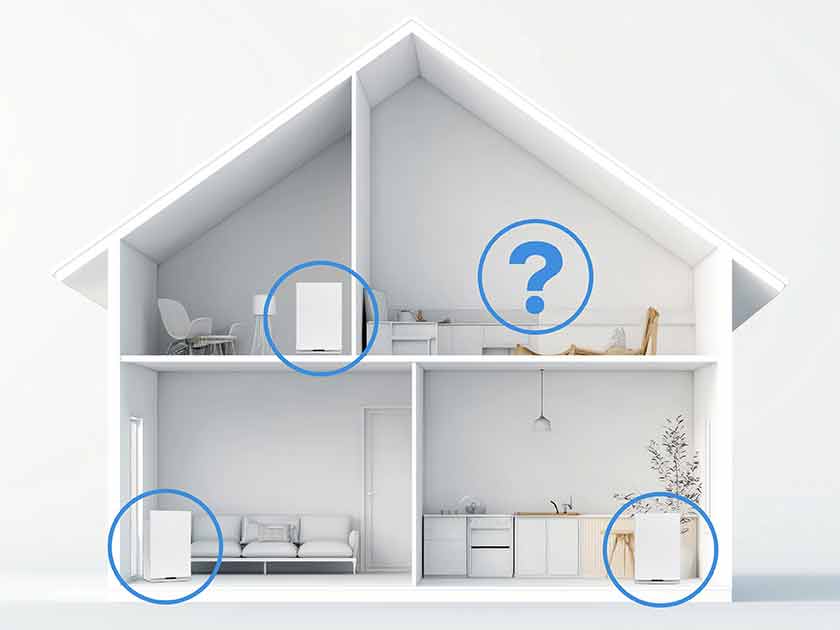
When it comes to clean air, is one air purifier enough? While having one air purifier is good, your situation may require more than one unit for truly effective air cleaning. Factors such as your home size, health issues, local pollution levels, and air purifier specifications all matter. Here’s how to decide how many air purifiers you need for your situation.
Identify Your Specific Needs and Concerns
Sizing your air purification system plan to your home starts with identifying areas of concern.
Health Concerns
Your individual health situation plays a part in how clean you need your air to be. Those with a sensitivity to airborne irritants or have respiratory issues can benefit from cleaner air. This is especially true for specific health concerns like asthma or chronic obstructive pulmonary disease (COPD). Removing allergens such as pollen, pet dander, dust mites, and mold spores can help alleviate allergic reactions that can lead to other issues. Young developing lungs also need protection against harmful airborne pollutants. An air purifier can help remove illness causing airborne bacteria and viruses, an especially helpful thing during cold and flu season.
Pollution Levels
You need to consider pollution levels both indoors and outdoors. Outside pollution becomes inside pollution eventually, so keep an eye on your local air quality. If your local outdoor air quality is consistently a problem, you likely need enough air cleaning power to fight back. This is especially true if you live in any of the most polluted counties in the country. Some air pollution problems are constant (like living near a highway) while others may be seasonal. For particulate pollution like PM2.5 you need a HEPA-level air filter. For more complex pollutants (like wildfires) you need not only a mechanical filter but a volatile organic compound (VOC)/smoke filter.
Air pollution isn’t just an outside problem. Indoor air quality concerns can come from a variety of places. A few common indoor air pollution sources include:
- Gas appliances
- Tobacco smoke
- Flooring
- Furnishing
- Cleaning products
- Dust
- Mold
- Pesticides
Many of these sources can give off fine particulate matter as well as VOCs such as formaldehyde and other carcinogens. These require filtration technologies capable of capturing both particles and gases.
Home Layout
Home size and layout impacts your air purification system choices. Depending on the air purifier capacity you may be able to use one unit in an area or for larger areas multiple units may be necessary. You need to take into account not only room dimensions but also overall layout. For example a home with more than one floor will need an air purifier for each level. Areas with poor air circulation may need their own air purifier. Typically an air purifier is set to run constantly to continuously clean the air. The exception would be a whole-home air purifier which operates when the HVAC circulation fan is on.
Consider Air Purifier Capacity and Coverage
When shopping for an air purifier it is important to note the clean air delivery rate (CADR). CADR is the measurement of how many cubic feet per minute (CFM) of air a unit can clean. If you know the air purifier CADR and the total room volume you can calculate the total number of air changes per hour (ACH). Experts recommend an ACH of 4 for most residential spaces. Anything less and the air purifier may not reach a sufficient coverage area.
In order to improve indoor air quality it takes more than just slapping a HEPA filter into an air purifier. A high-capacity air purifier needs to be able to clean air at a fast enough rate to satisfy the ACH needs of a room. It takes careful attention to details like an efficient intake fan design and a sealed filter chamber to prevent air bypass. Small particles are captured by the mechanical filter, but to remove volatile organic compounds (VOCs) an activated carbon layer filter is necessary. Filter types have to be accounted for in the overall air purifier design so that a sufficient CADR is achieved.
Air Purifier Efficiency Factors
There are a few things that can influence air purifier efficiency.
Air Circulation
It is important that air can flow freely around the air purifier. Nothing should block the intake fan or outlet duct. Barriers in the room like furniture, low walls or floor-to-ceiling height walls that jut into the room can impede airflow. Regular furnace and AC maintenance is necessary to make sure air is circulating around the home efficiently. Moving to a higher filter quality MERV rating can actually cause an airflow imbalance due to the increased airflow resistance of the filter material. It may also increase energy consumption as the fan has to work harder.
Room Size
Large spaces require more air movement to clean the air effectively. In the case of a large room using either an air purifier with a high CADR or multiple air purifiers for a greater combined CADR is acceptable.
Humidity
Excess moisture in the air can affect air purifier performance. If humidity levels stay above 75% for long periods of time the filter may clog faster as particles clump together in the air. In extreme cases mold and bacteria may even grow on both HEPA and activated carbon filters.
Local Air Quality
If local outdoor air quality and pollution levels are constantly bad an air purifier may struggle to keep up. Making sure the indoor air is separated from the bad outdoor air is paramount. Keep doors and windows shut as much as possible along with verifying weatherstrips are intact.
For the most part temperature does not affect air purifier efficiency. Only in extreme heat conditions could issues with electronics arise, but most homes are kept at indoor air temperatures well below that threshold.
Room Size and Layout
As previously mentioned, room size and layout plays a part in determining how many air purifiers you need.
Calculating Room Size
Regardless of the size or type of air purifier, start by finding the room volume. A simple single room calculation starts by measuring the length, width, and height of the room. Multiply the length times the width to find the square footage, then multiply the square footage by the height to find cubic footage volume. For example:
- Room length: 12 feet
- Room width: 10 feet
- Room height: 8 feet
Square footage: 12 feet times 10 feet = 120 square feet
Cubit footage: 120 square feet times 8 foot room height = 960 cubic feet
Finding the size of multiple rooms and open spaces may seem daunting but it isn’t hard. Just break down each area as a single box, calculate the size of that box, and add all the boxes together. For open concept spaces like a combination living room/kitchen there may be irregularities in the walls or other space intrusions. Just treat the walls as all smooth and measure the longest uninterrupted path. It is okay to overestimate the room volume. Once you have the total room volume you can use it to find an air purifier with an appropriate CADR to reach the ideal ACH.
Room Layout Considerations
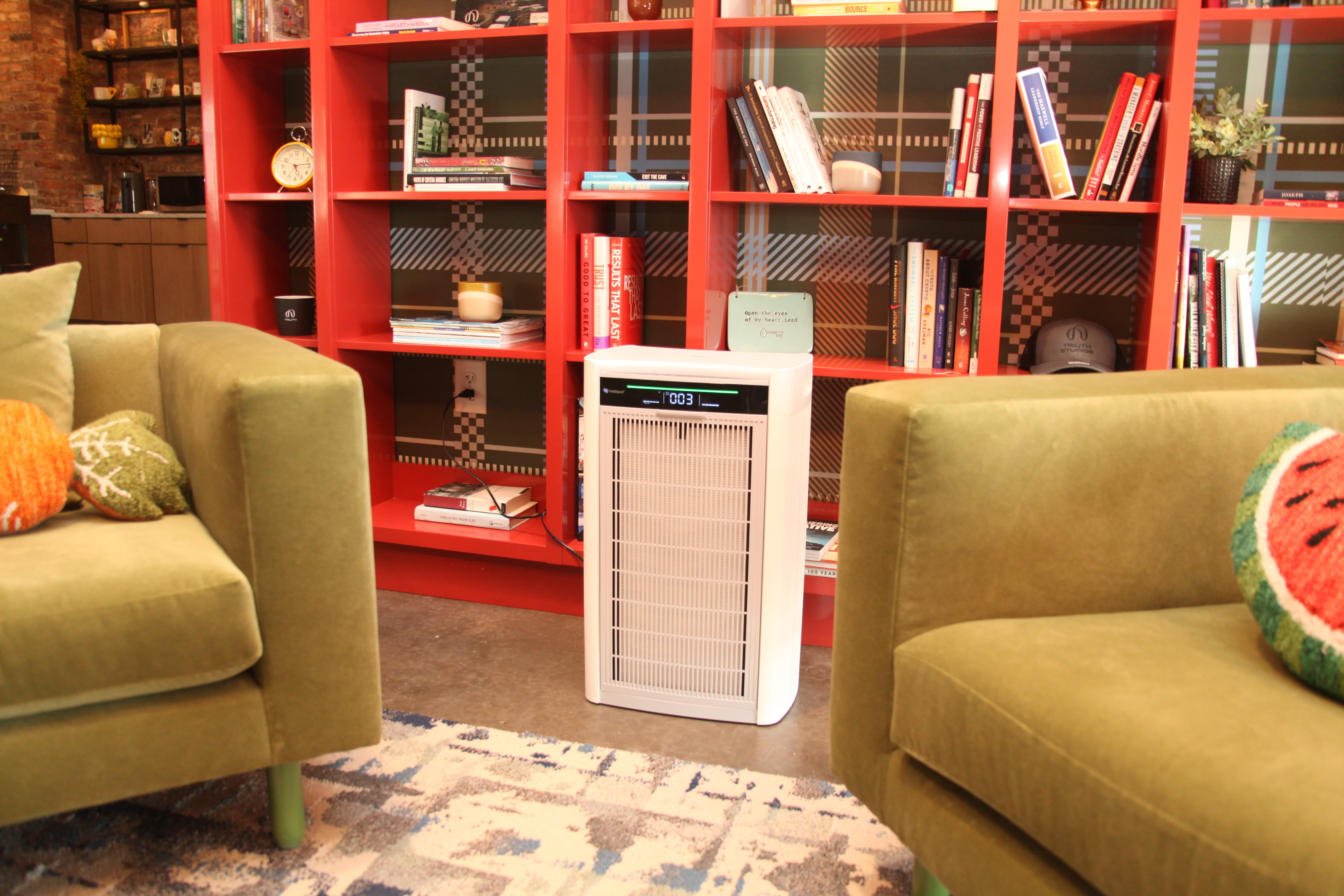
Cleaning the air in a rectangular room is easy to do. But an awkward room layout and furniture placement can interfere with air circulation. Anything that prevents air from moving smoothly from one area to another should be taken into consideration (room dividers, book shelves, tall furniture, etc,) and treated as separate spaces. Rooms that are L-shaped for example may need an air purifier at each end. You can use an indoor air quality monitor to gauge pollution levels across an area to find where an air purifier is needed the most. By using strategic placement of HEPA air purifiers you can maximize their air cleaning effort and put health concerns at ease.
Single vs. Multiple Air Purifier Units
So when do you need more than one air purifier? That depends on a few different factors.
Single Air Purifier
Here are a few situations where only one air purifier is necessary:
- Simple and/or small home designs like a studio apartment or similar open layouts.
- If room-specific air quality is the only concern, then a single air purifier can be used in that room (like a bedroom).
- Choosing a whole-home air purifier designed for HVAC system integration.
Basically if the air purifier has a high enough CADR to achieve at least a 4 ACH rating for the space, you only need one.
Multiple Air Purifiers
These are common situations where more than one air purifier is necessary:
- Large square footage coverage across multiple distinct areas.
- Complex layout or multi-level homes.
- Geographic areas with high pollution levels that need constant air cleaning.
- Broad air purification coverage across the entire home for sensitive individuals.
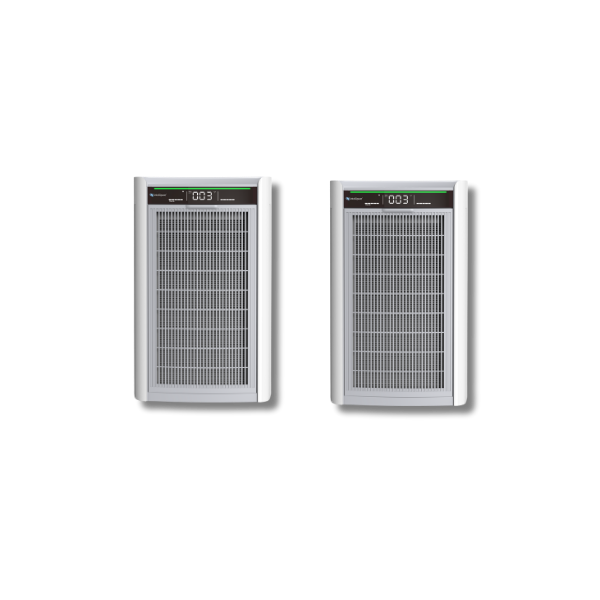
There is no such thing as over-purification, so having a few single-unit air purifiers with strategic placement across the home can only improve indoor air quality. When using multiple air purifiers in the same home simply add their CADRs together to find the total air cleaning capacity. You can then divide the total home air volume by the total CADR to find your ACH.
Professional Air Purifier Guidance and Services
If you are looking for tailored solutions it may be best to seek out expert advice about indoor air quality services. Most HVAC maintenance and installation companies are familiar with air purification equipment. They can help explain the different air purifier benefits along with air purifier placement suggestions or even offer professional installation of a whole-home air purifier. Your local HVAC company may offer routine maintenance for your air purifier along with other indoor air quality services like duct cleaning.





How Long for Air Purifier to Work Effectively?
Do Air Purifiers Help with Smoke Smell Removal?